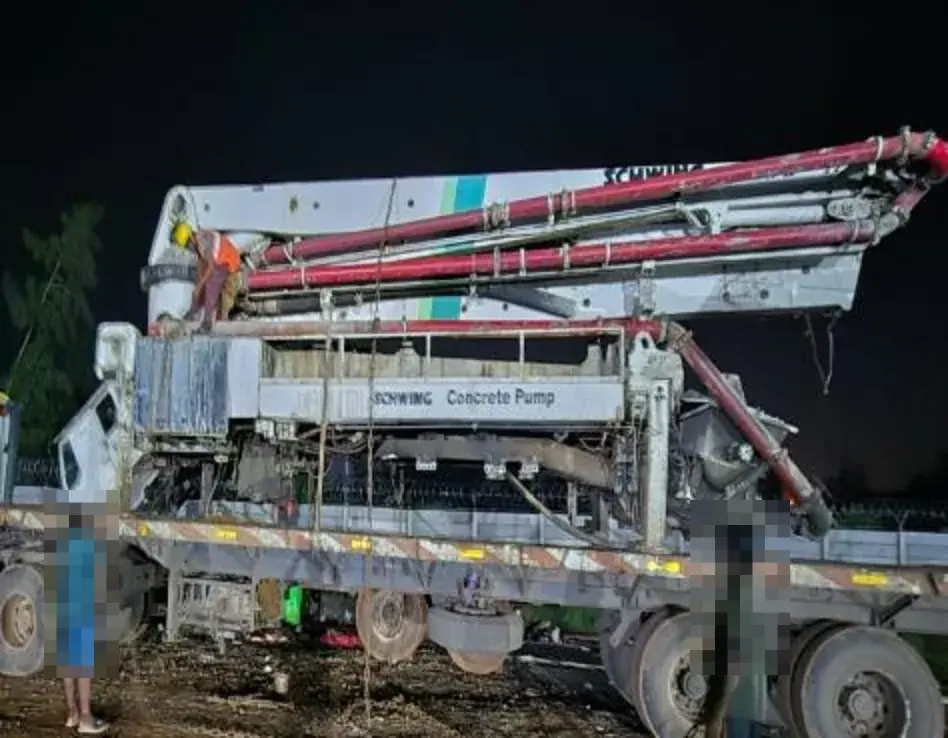
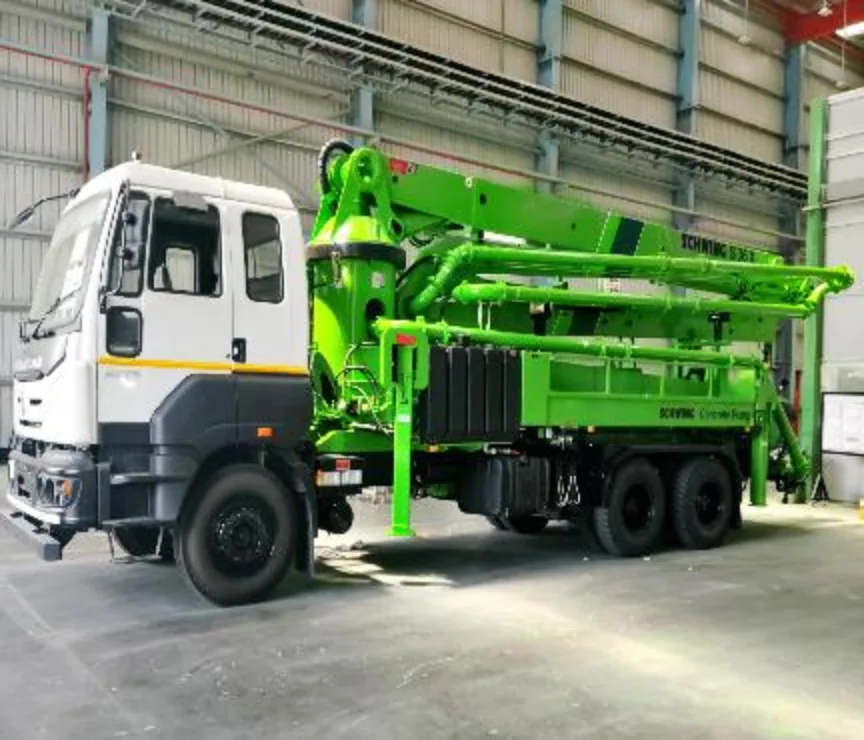
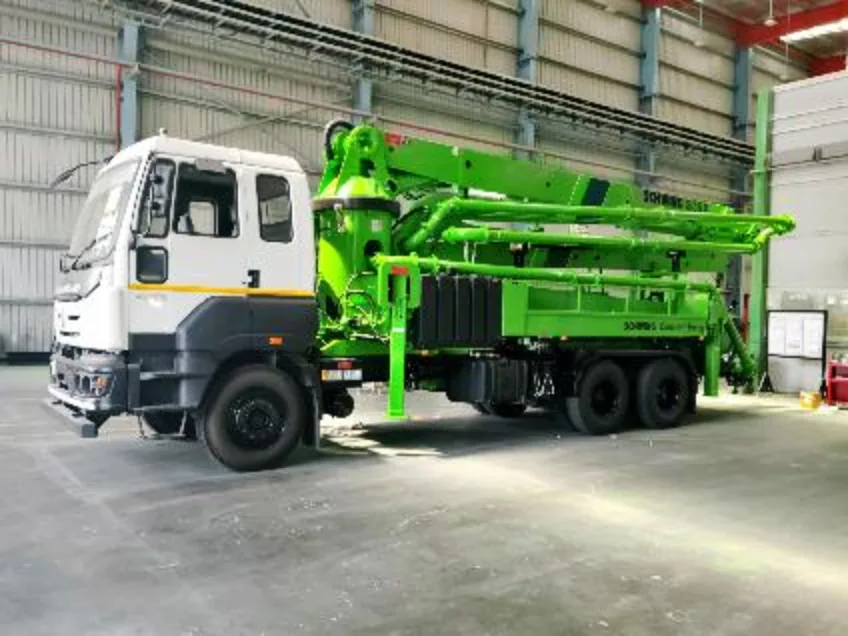
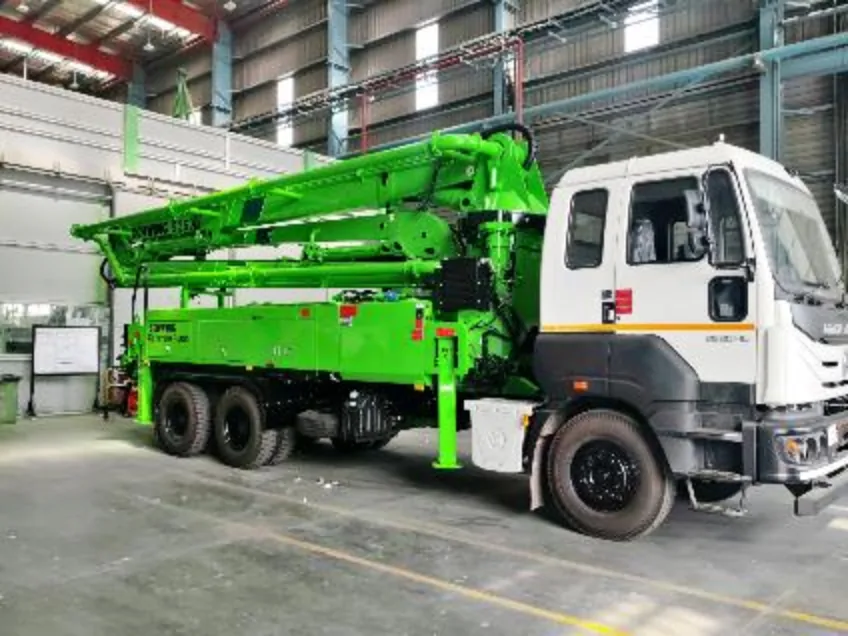
An older Schwing S 36 X truck-mounted boom pump arrived at Schwing Stetter India's factory in Tamil Nadu on a trailer, with its paint gone, its hopper caked in concrete and its steel rusting. It left on its own wheels in Schwing green. The new nameplate records the refurbishment as August 2024.
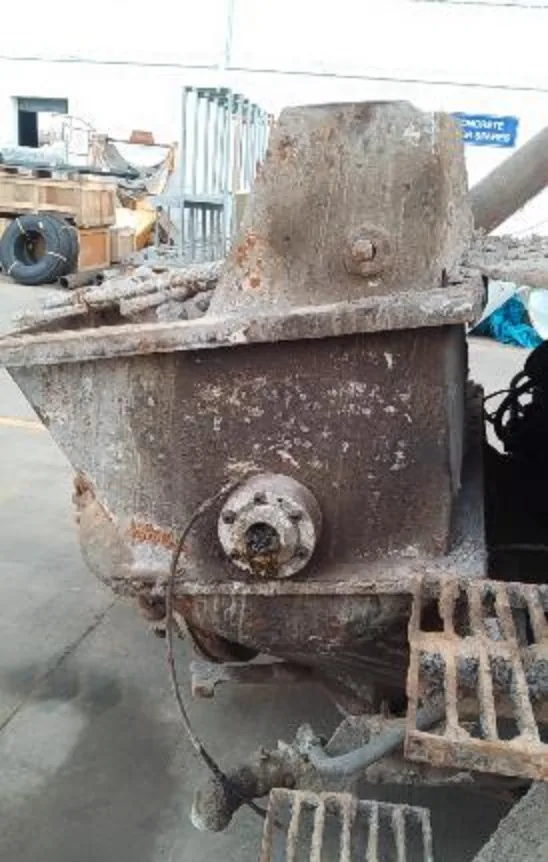
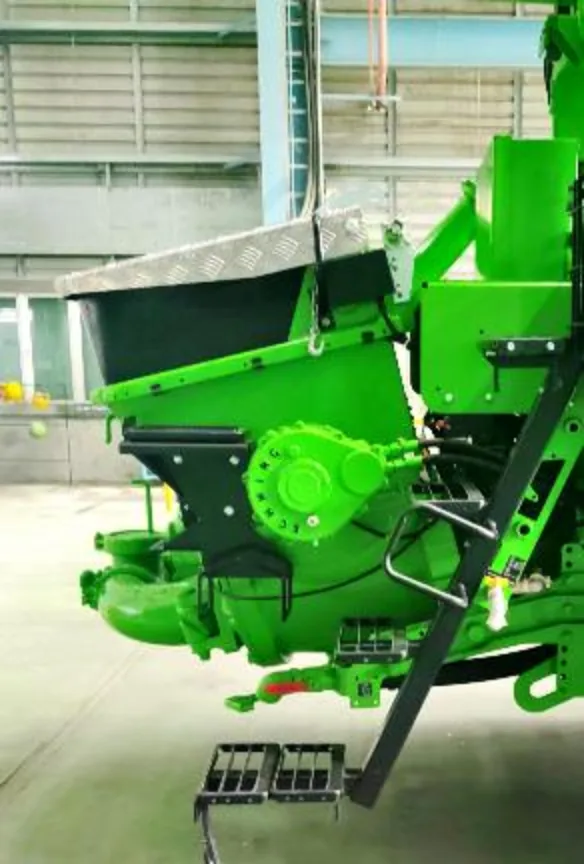
Not every buyer needs a new boom pump. For a contractor who wants a Schwing machine at a lower outlay than new, a factory-refurbished unit is the other route. The factory photographed this one before and after, one assembly at a time, and that record shows what the buyer of a refurbished pump is paying for.
Where a refurbished pump makes sense
- A first boom pump for a contractor moving up from line pumping.
- A second unit to cover busy periods, where a new machine would sit idle part of the year.
- A fixed equipment budget that a new machine would not fit.
The trade-off is plain: it is an older machine. What decides its value is how much of it was renewed, and whether that was tested. The rest of this article goes through both.
Structure first: the subframe
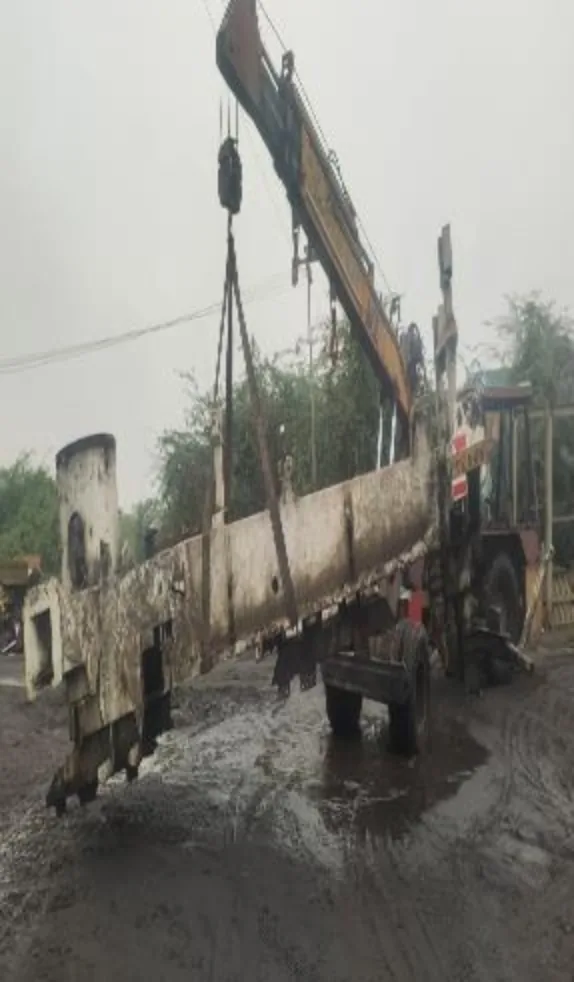
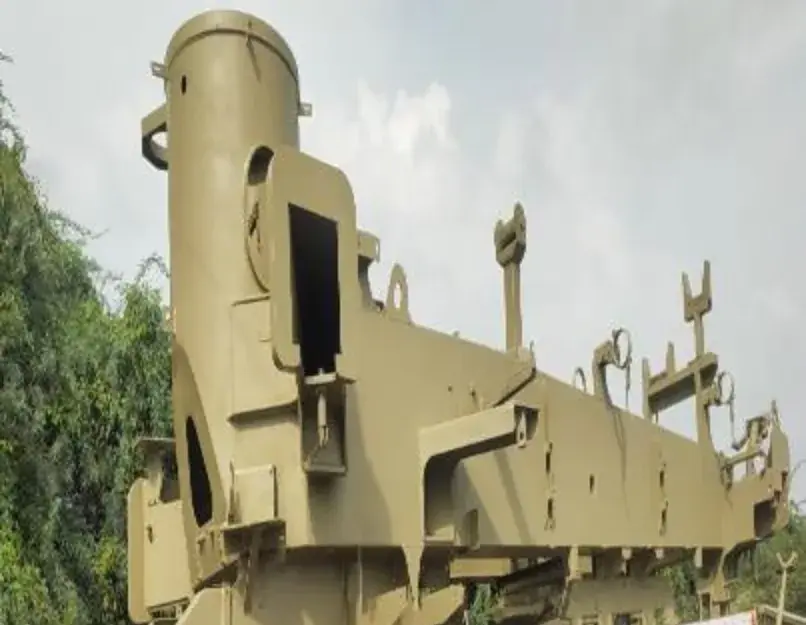
The subframe carries the boom and the outriggers, so it was dealt with before anything was bolted back on. It was lifted off, shot blasted and primed. The record also shows corroded subframe parts replaced with newly fabricated ones.
The hopper
The hopper came in buried under hardened concrete. It went out clean and repainted, with its grate in place.
A newer control system
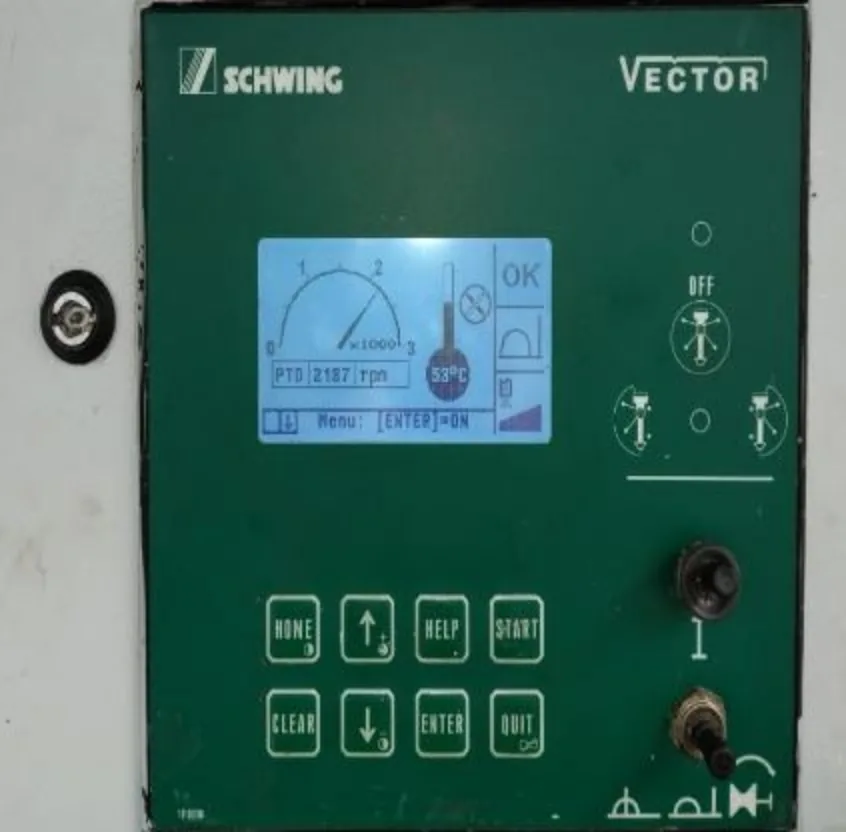
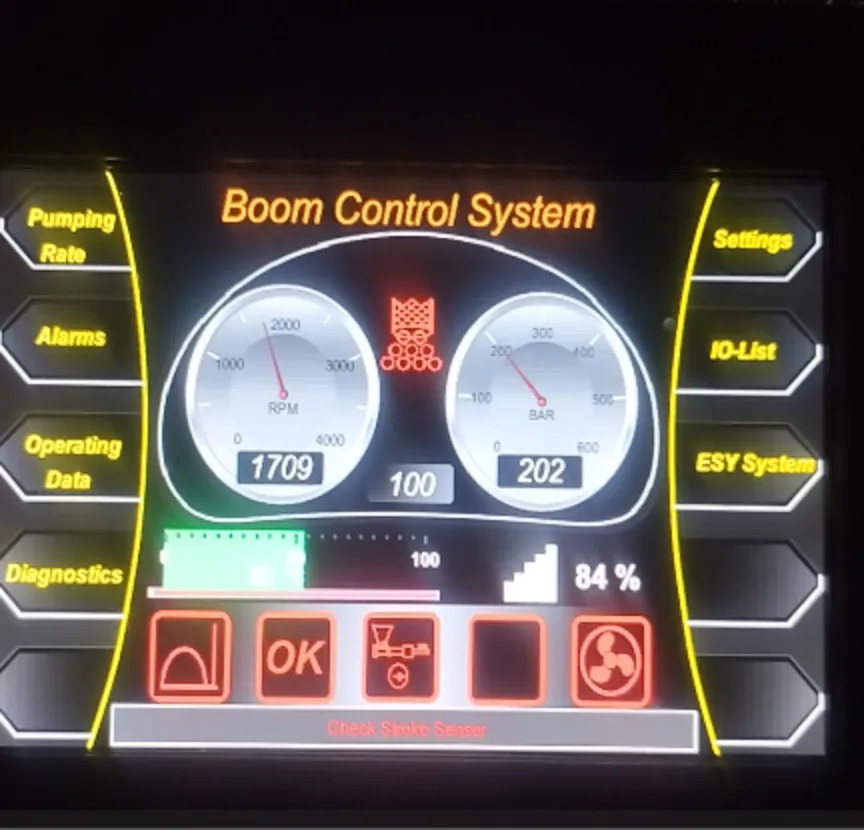
This is the change an operator notices first. The machine arrived with Schwing's Vector control and its single-color display. It left with a Boom Control System and a color screen that shows pumping rate, alarms, operating data and diagnostics.
The boom control block, the valve block that moves each boom section, was replaced with a new one.
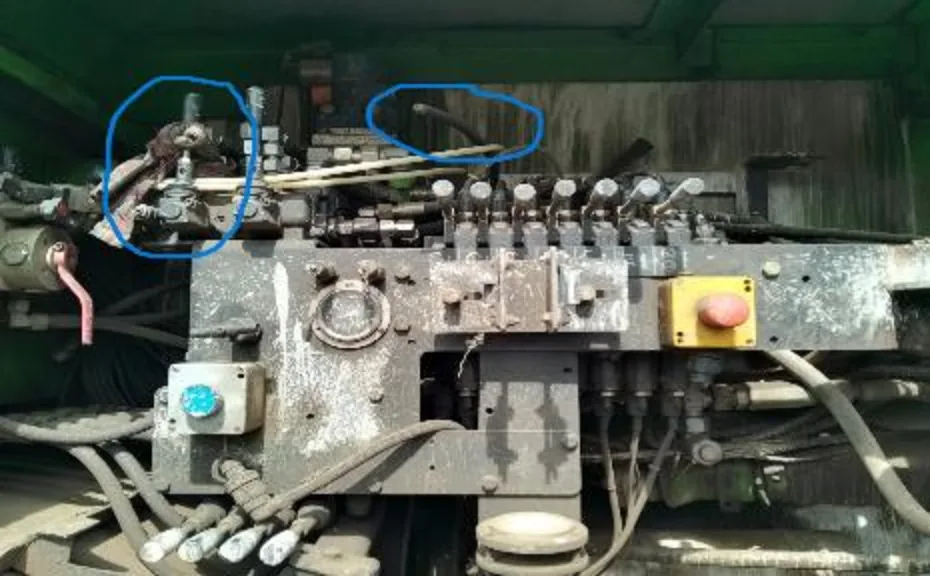
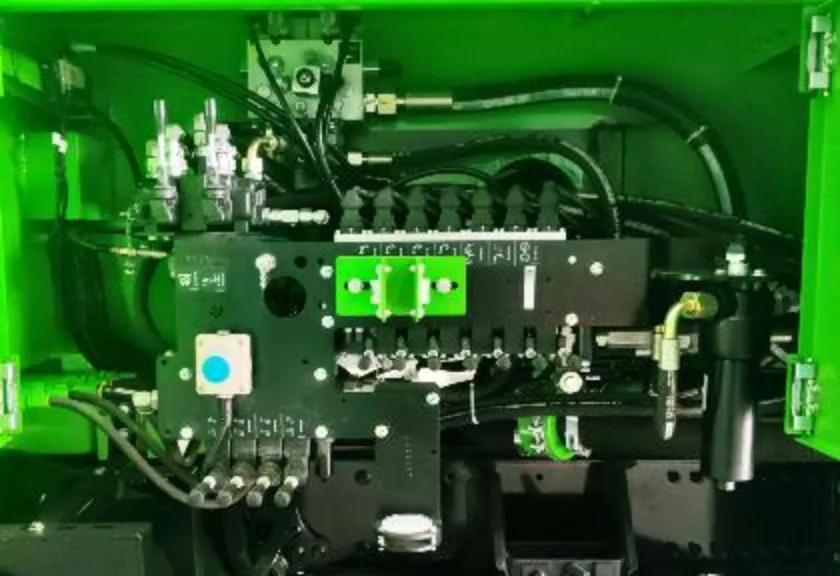
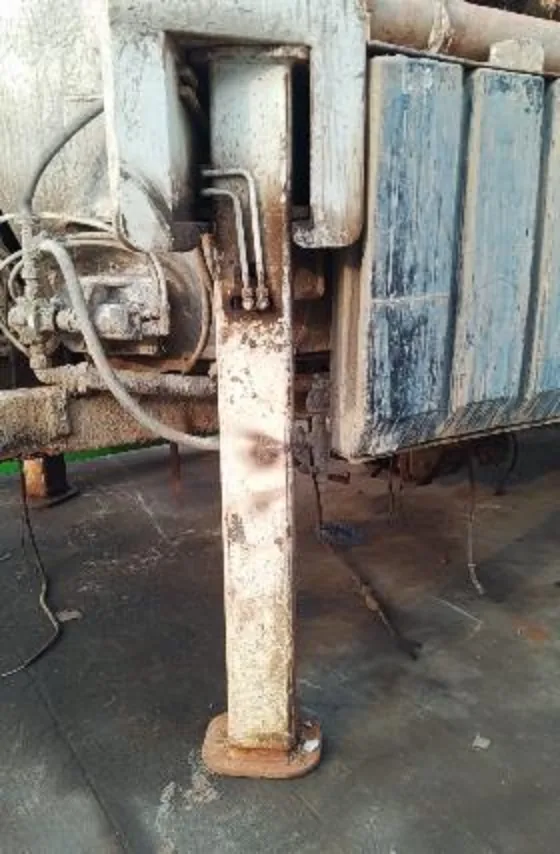
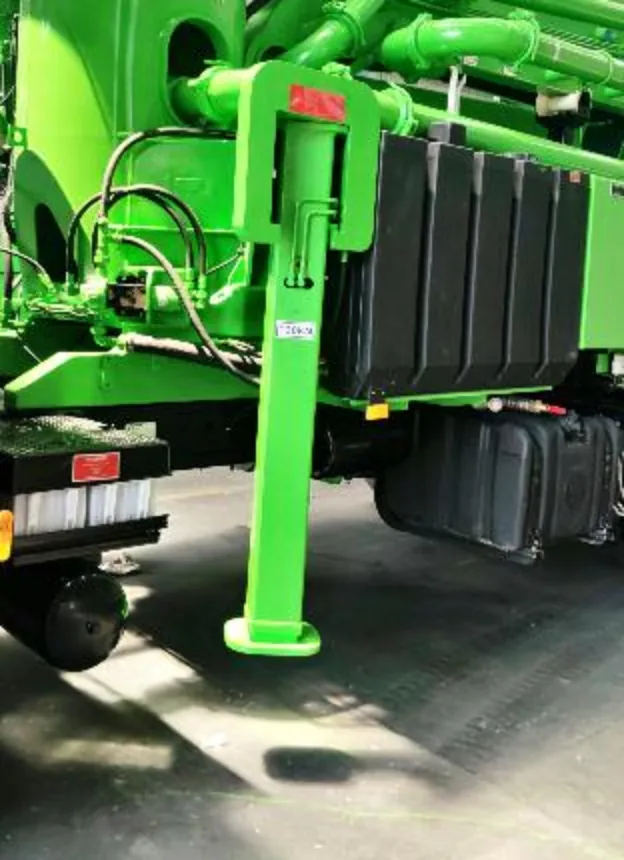
Outriggers, operating box and water system
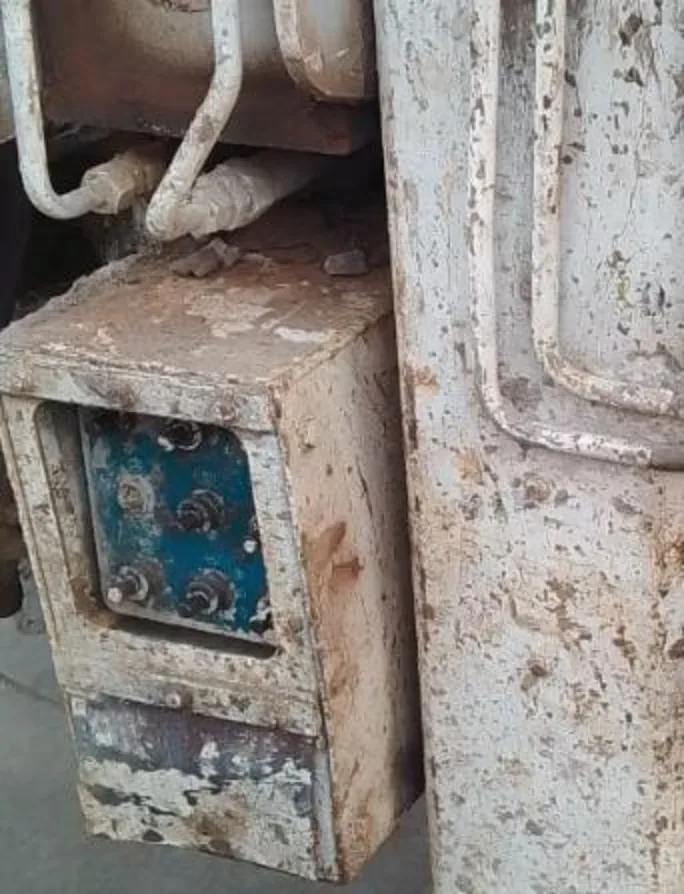
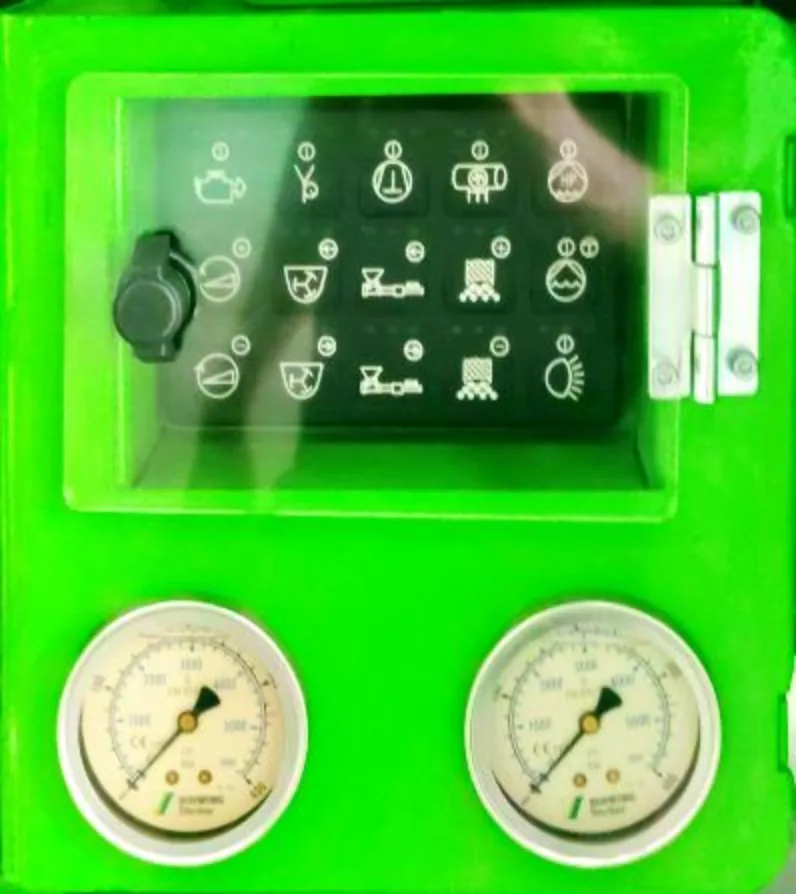
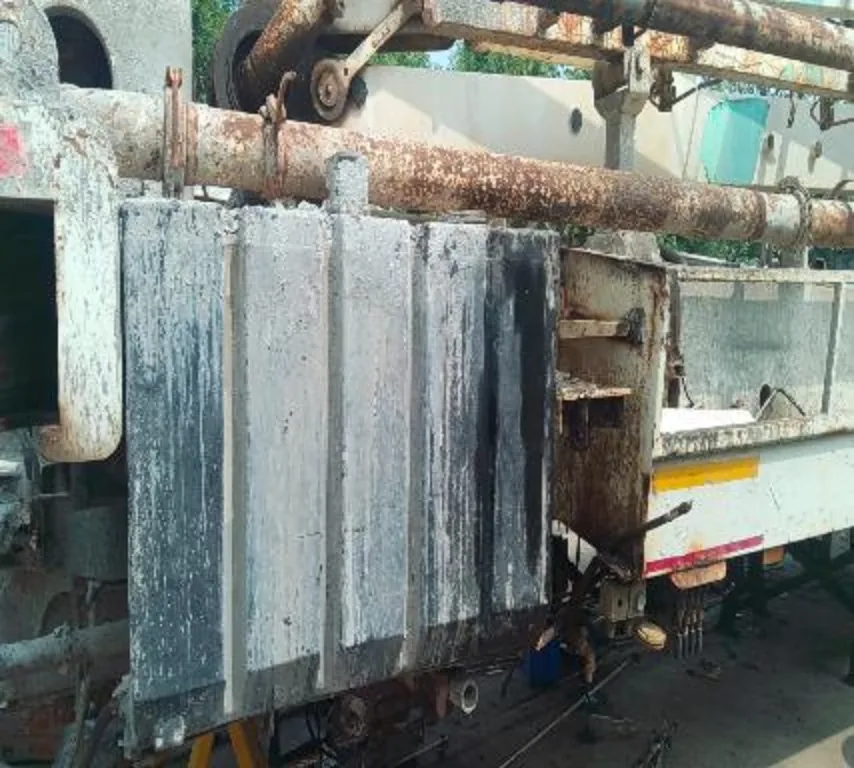
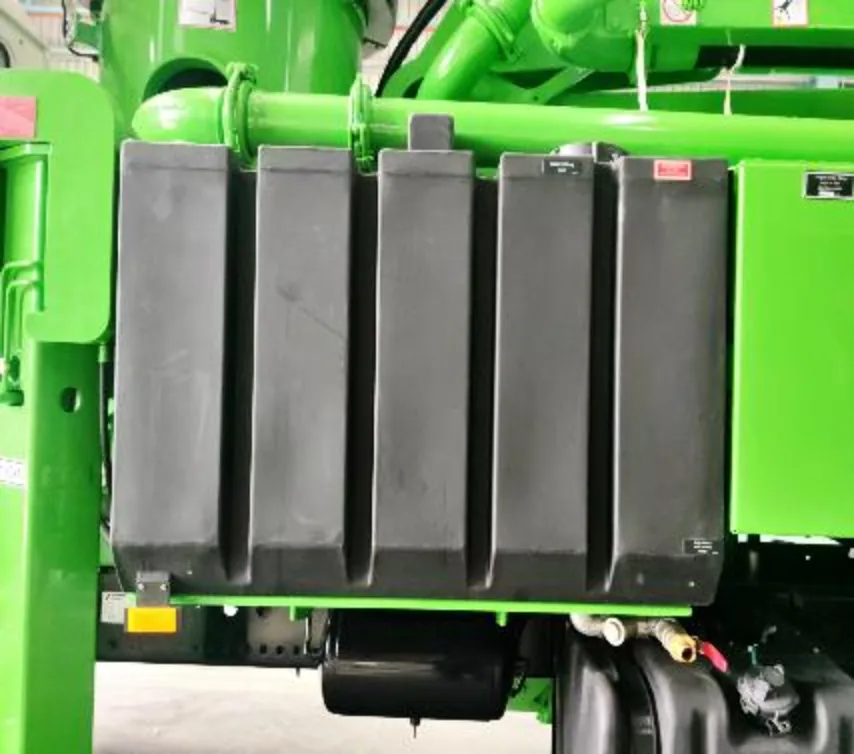
The rest of the machine was taken through the same treatment. The local operating box was rebuilt with new pressure gauges, and the water tanks were replaced.
Drive and boom safety valves
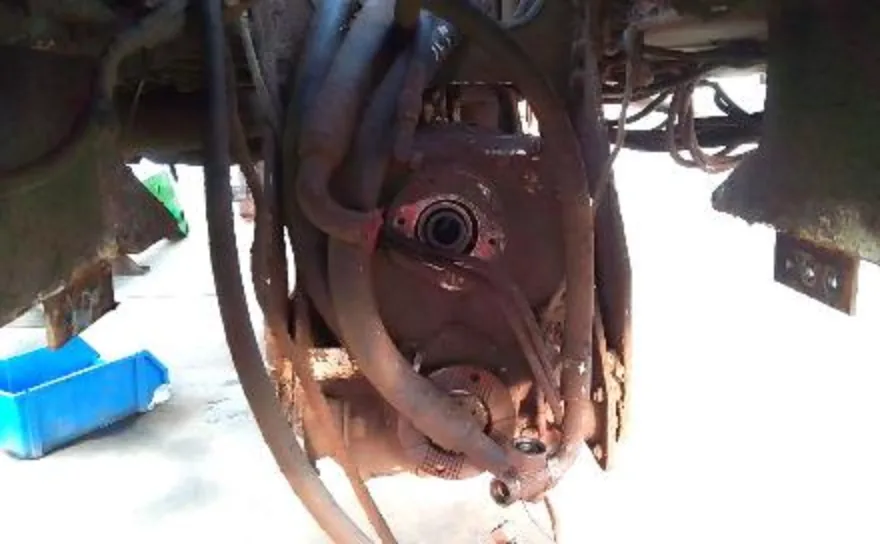
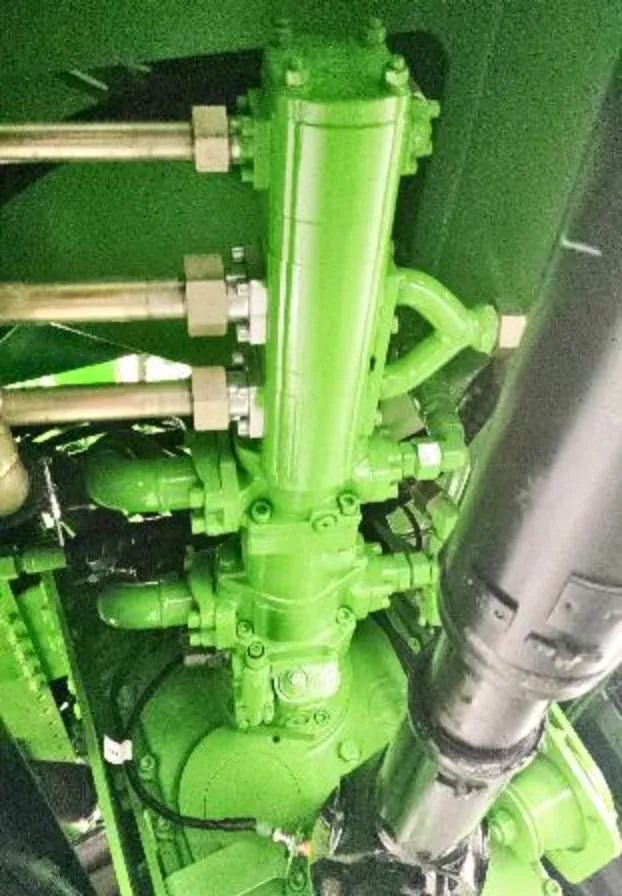
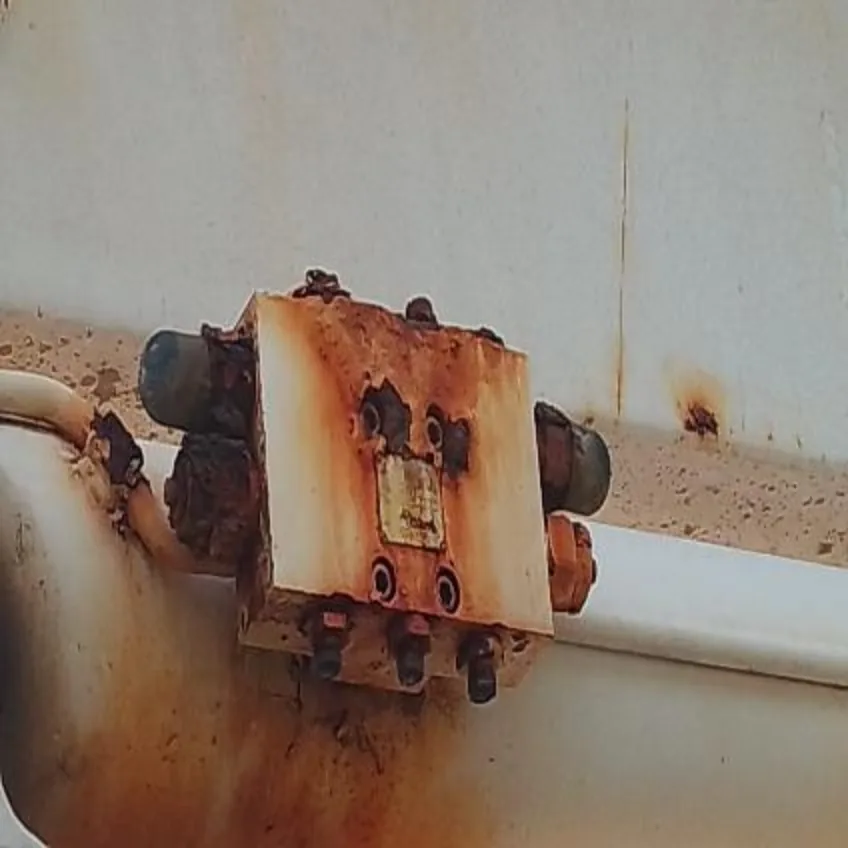
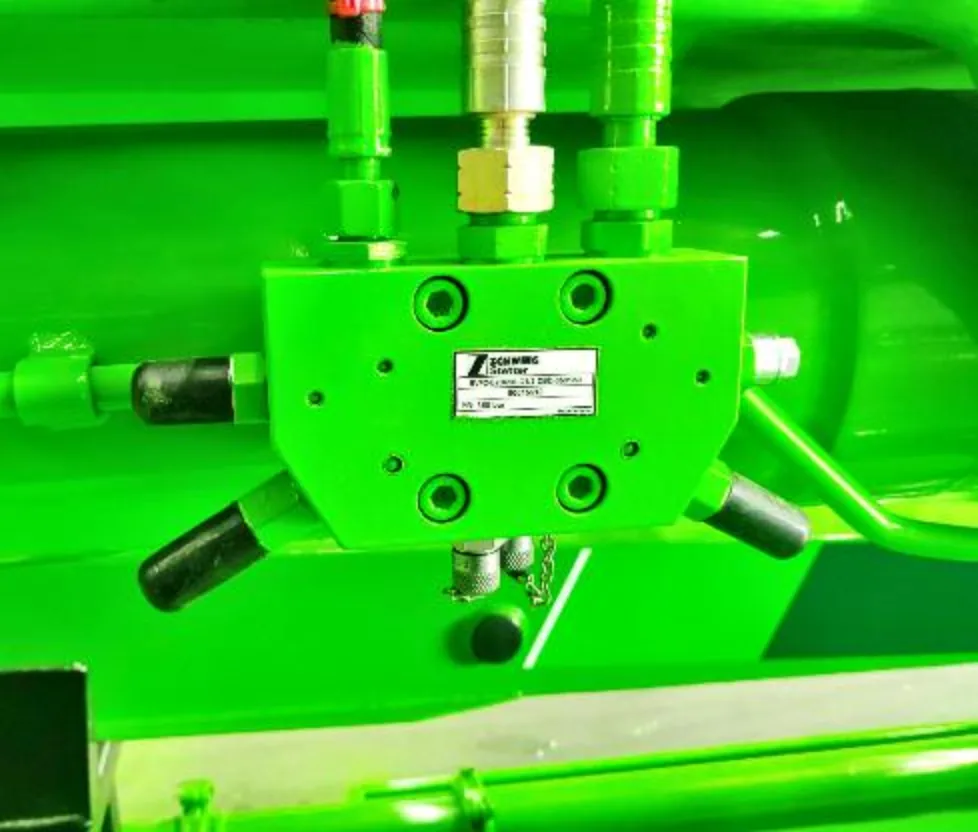
The PTO gearbox, which takes power from the truck to the pump hydraulics, is shown before and after. So are the holding valves on the boom cylinders, the valves that keep a boom section in place if a hose fails.
Reconditioning and testing
Two steps do not show in a walk-around photo. Boom cylinders are reconditioned as sub-assemblies and pressure tested. Then the boom is tested to Schwing's standard: each section and the slewing are timed, pressures are checked against a set-point sheet, and the sheet is signed by the tester and by quality control.
What the buyer gets
| Assembly | What was done |
|---|---|
| Subframe | Shot blasted and primed; corroded parts newly fabricated |
| Hopper | Cleaned of hardened concrete, repainted, grate in place |
| Control system | Vector control replaced by Boom Control System with color display |
| Boom control block | Replaced with a new block |
| Outriggers | Refurbished and repainted |
| Manual operating box | Rebuilt, with new pressure gauges |
| Water pump and tanks | Pump refurbished; tanks replaced |
| PTO gearbox | Shown before and after |
| Boom cylinders | Reconditioned and pressure tested; holding valves shown before and after |
| Whole boom | Timed and pressure checked against a set-point sheet |
Six questions to ask about any refurbished boom pump
- Was the subframe stripped and blasted, or painted over?
- Which control system does it have now, and can it still be supported with parts?
- Were the boom cylinders and holding valves opened and tested, or only cleaned?
- Is there a signed test sheet with boom timings and pressures?
- Who did the work, and does a nameplate record it?
- What warranty and parts support come with it?