Sand and stone make up most of every cubic meter of concrete, and they are the cheapest part of it. The size of that stone, and how well the sizes are blended, decides how much cement you need, how the concrete handles and whether it reaches its strength. A batching plant cannot change the stone you buy. What it can do is keep the sizes apart, weigh each one, and put the same blend into every batch.
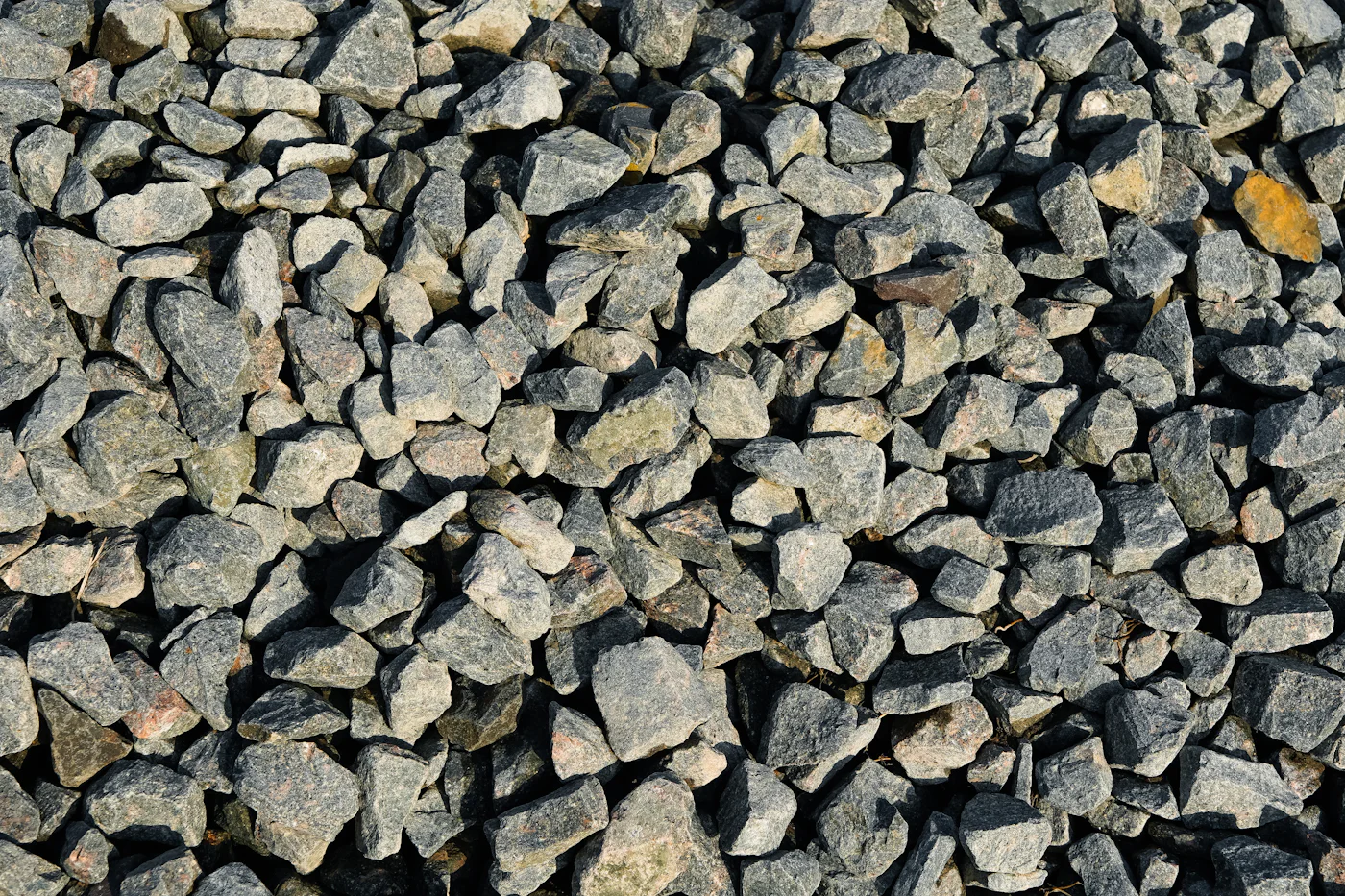
Why stone size changes the mix
Think of a box filled with large stones. The gaps between them have to be filled with smaller stone, then sand, then cement paste. The better the sizes fit together, the less paste is needed to fill what is left, and paste is where the cement cost sits.
- Larger stone needs less cement. For the same strength and workability, a mix with larger stone has less surface to coat and needs less water and cement.
- Smaller stone goes where large stone cannot. Thin sections, tight reinforcement and pump lines all limit how big the stone can be.
- A blend beats a single size. Two stone sizes with a well-graded sand pack more tightly than one size alone, which gives a denser, stronger concrete.
- Sand carries water. Wet sand brings water into the batch that nobody measured, and the water-cement ratio drifts with it.
Three stone sizes, and what each one is for
The stones below are drawn at the same scale, so you can see how much bigger G1 is than the other two.
3/8
Up to about 10 mm
3/4
About 10 to 20 mm
G1Largest
About 20 to 40 mm
Will your mixer take it?
Largest stone each Stetter M series mixer type accepts. The dashed lines mark the three stone sizes.
G1 sits right at the pan mixer limit. If your G1 runs coarser than 40 mm, a planetary or twin-shaft mixer is the safer choice.
G1, 3/4 and 3/8: how concrete is ordered in the Philippines
Ask a Philippine ready-mix supplier for concrete and the order has three parts: a strength in psi, a stone size, and the age at which that strength is due. "3000 psi, 3/4, 28 days" is a complete order. The stone sizes go by their trade names.
| Trade name | Stone size | Where it is normally used |
|---|---|---|
| G1 | About 20 to 40 mm (roughly 3/4 to 1 1/2 inch) | Footings, foundations, pavements and other thick pours |
| 3/4 | About 10 to 20 mm | The general structural size: columns, beams, slabs and precast |
| 3/8 | Up to about 10 mm | Thin sections, closely spaced reinforcement and small pump lines |
| Concrete sand | Up to about 5 mm | The fine aggregate in every mix. It fills the gaps between the stones |
Sizes vary a little from one quarry to the next. Ask your supplier for the grading, not only the name. Concrete aggregates are normally supplied to ASTM C33, so ask for the grading against that standard.
What "G1 concrete mix" means
It is concrete made with G1 as the coarse aggregate. It is not a strength. The same 3000 psi can be designed with G1 or with 3/4. The larger stone generally needs less cement to get there; the smaller stone is easier to place and pump.
What the PSI number means
PSI is the compressive strength of the hardened concrete, in pounds per square inch, found by crushing test cylinders. The standard age is 28 days. Suppliers also quote a strength at 14, 7 or 3 days for work that has to be stripped or loaded early. That is a different mix design, not the same concrete tested sooner.
| Ordered as | In metric |
|---|---|
| 2,500 psi | 17.2 MPa |
| 3,000 psi | 20.7 MPa |
| 3,500 psi | 24.1 MPa |
| 4,000 psi | 27.6 MPa |
| 5,000 psi | 34.5 MPa |
Strength comes mainly from the ratio of water to cement, not from the stone size. So the two parts of the order land on different parts of the plant. The stone size decides which aggregate gate opens. The psi decides how much cement and water go onto their scales. A plant that weighs all three, and corrects for the water already in the sand, is what makes "3000 psi G1" the same concrete on the last truck as on the first.
G1 tops out at about 40 mm, which is the limit for the pan mixers on the smaller M series plants. The twin-shaft mixers take stone up to 63 mm.
Class AA, A, B and C: the mix ratio by volume
On a Philippine site without a batching plant, concrete is still often proportioned by class: so many parts of cement, sand and gravel, measured by volume. Pick a class to see the recipe and where it is normally used.
Mix ratio by volume, and where it is used
Parts of cement, sand and gravel for each class, and the cement it takes per cubic meter.
1 : 2 : 4
cement : sand : gravel, in parts by volume
9
bags of cement per cubic meter (40 kg bags)
General structural work: footings, columns, beams and suspended slabs
Site-mix proportions as commonly used in the Philippines. The class is a recipe, not a tested strength. Follow the mix your structural engineer specifies.
Each of these recipes takes about half a cubic meter of sand and one cubic meter of gravel for every cubic meter of concrete. What changes is the cement.
The letter is a recipe, not a tested strength. When the drawings call for a strength in psi, the mix has to be designed, weighed and proven with test cylinders. That is the work a batching plant does: it weighs the cement, the water and each stone size, batch after batch, instead of counting boxes.
What the plant does with it
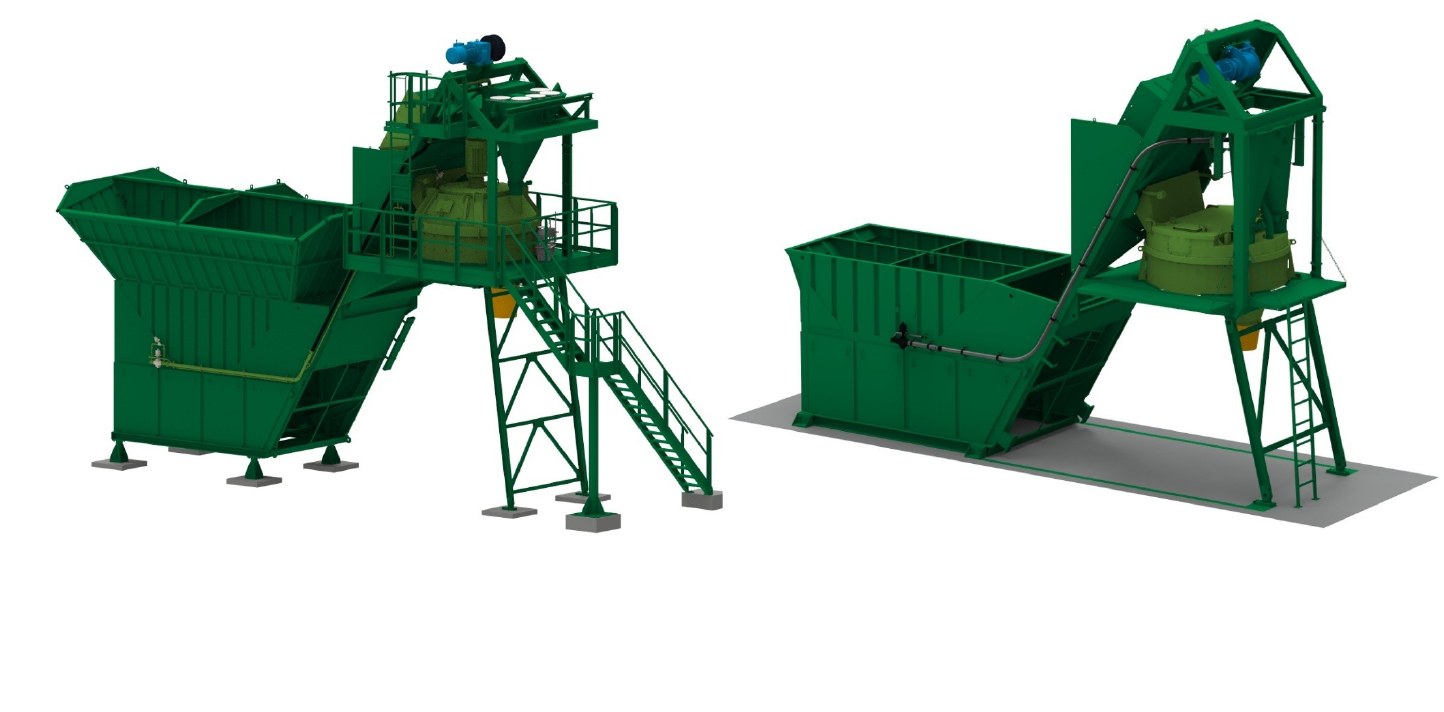
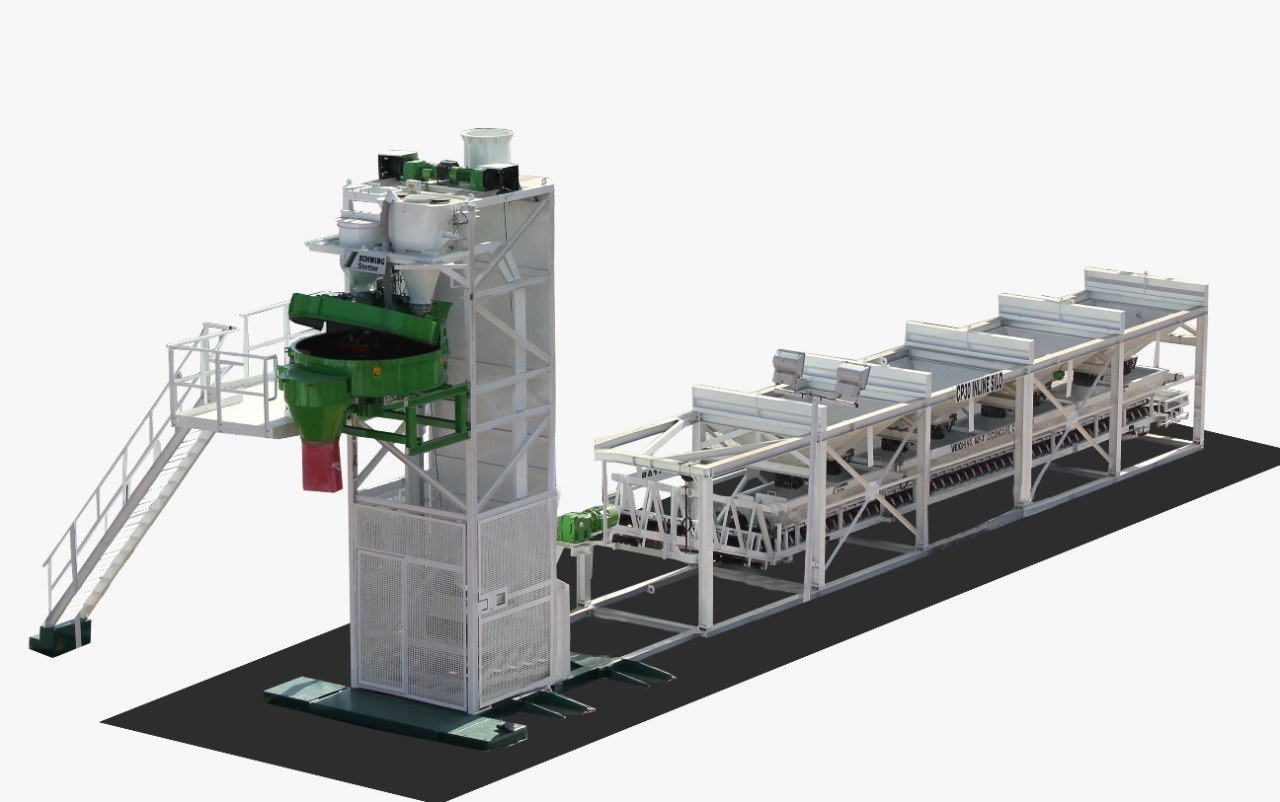
It keeps each size in its own bin
A mix design that calls for two stone sizes and two sands needs four separate stores. The CP 18 has four aggregate compartments. The CP 30 holds four sizes with a scraper or compartment batcher and up to six with an in-line silo. On the M series, the compartment batcher has four chambers and the in-line silo has five bins with ten batching gates.
How the sizes are kept apart depends on the plant. Some plants stockpile them around a scraper, some hold them in compartment bins filled by a wheel loader, and larger plants use a row of in-line silos fed by conveyor.
It weighs each size, every batch
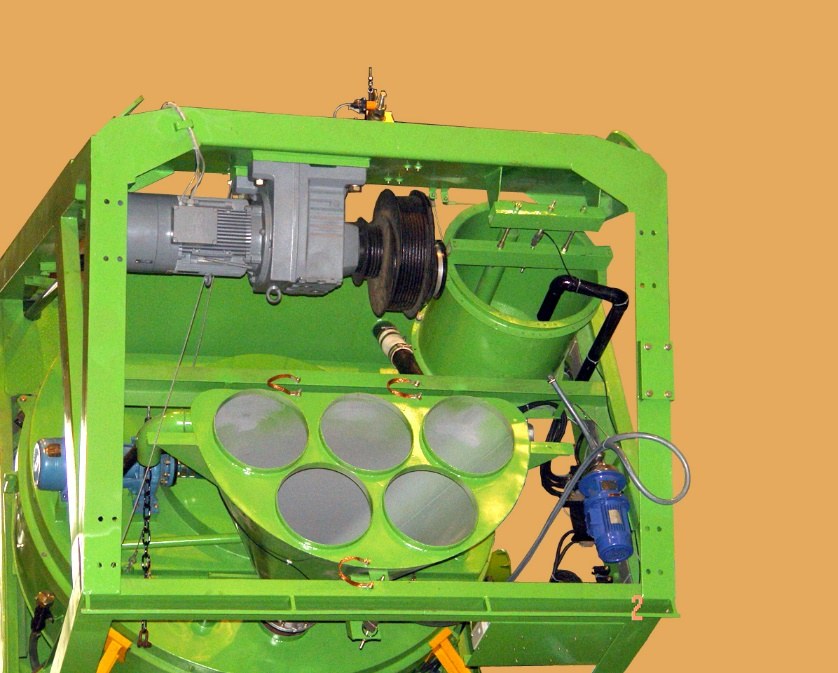
The sizes are not fed by volume or by loader bucket. Each one is discharged through its own gate onto the scale until its target weight is reached, then the next. The scale on a CP 18 weighs up to 700 kg of aggregate per batch on the C3 version and 875 kg on the TM version, the CP 30 up to 1,250 kg and the M 2.5 up to 6,250 kg.
It corrects for what changes during the day
The plant control system has settings for weighing tolerance, a coarse then fine feed so each gate closes on target, the material still falling when a gate shuts, and the moisture in the aggregate. These are what keep batch 200 the same as batch 1 when the sand pile gets wetter after rain.
It mixes what the recipe asked for
Cement and water are weighed separately, on their own scales, and everything meets in the mixer. The mixer type sets the largest stone the plant can take: 40 mm for the pan mixers on the smaller M series plants, 45 mm for the planetary mixer, and 63 mm for the twin-shaft mixers from the M 1.25 upward.
What that is worth on site
- For a contractor batching for its own project: the mix the engineer approved is the mix that goes into the structure. Fewer failed cylinders, less cement added "to be safe", and no arguments with a supplier over what was delivered.
- For a ready-mix producer: every truck of a given grade is the same, whoever is on shift. You can run more mix designs from the same bins, and the batch record shows the customer exactly what was weighed.
Which plant for which job
| Plant | Output | Aggregate sizes | Mixer | Suits |
|---|---|---|---|---|
| CP 18 | 18 m³/hr | 4 | Pan | A contractor's own projects, housing, precast and pipe works |
| CP 30 | 30 m³/hr | 4, or up to 6 with in-line silo | Pan or planetary | Larger projects and small ready-mix supply; scraper version stores the most aggregate on the ground |
| M1 | 56 m³/hr | 4, or 5 with in-line silo | Pan, or twin-shaft on the M1T | Mobile plant for infrastructure jobs that move, and for growing ready-mix suppliers |
| M 2.5 | 112 m³/hr | 4, or 5 with in-line silo | Twin-shaft, stone up to 63 mm | Ready-mix production and large pours, including mass concrete with big stone |
Related
- Stetter batching plants and the three aggregate storage types
- Why a batching plant falls short of rated output
- Inside the M 2.5 at Godel Concrete
Not sure which plant fits your mixes?
Tell us your aggregate sizes, your grades of concrete and how much you pour in a day.