The pour is not finished until the line is clean. Concrete left in a pipe sets, narrows the bore and becomes the next job's blockage. Cleaning straight away, and checking the pipe walls regularly, is what keeps a pipeline earning for years.
Watch: cleaning a concrete pipeline
Clean at once, and clean the joints too
- Wash pipe sections with a water jet as soon as they come off. Fresh concrete rinses out. Set concrete has to be chipped out.
- Clean the couplings and their seals. Grit left in a coupling stops it sealing on the next job, and a leaking joint is how blockages start.
- Replace damaged seals now. It is the cheapest part on the line, and the most common cause of lost paste.
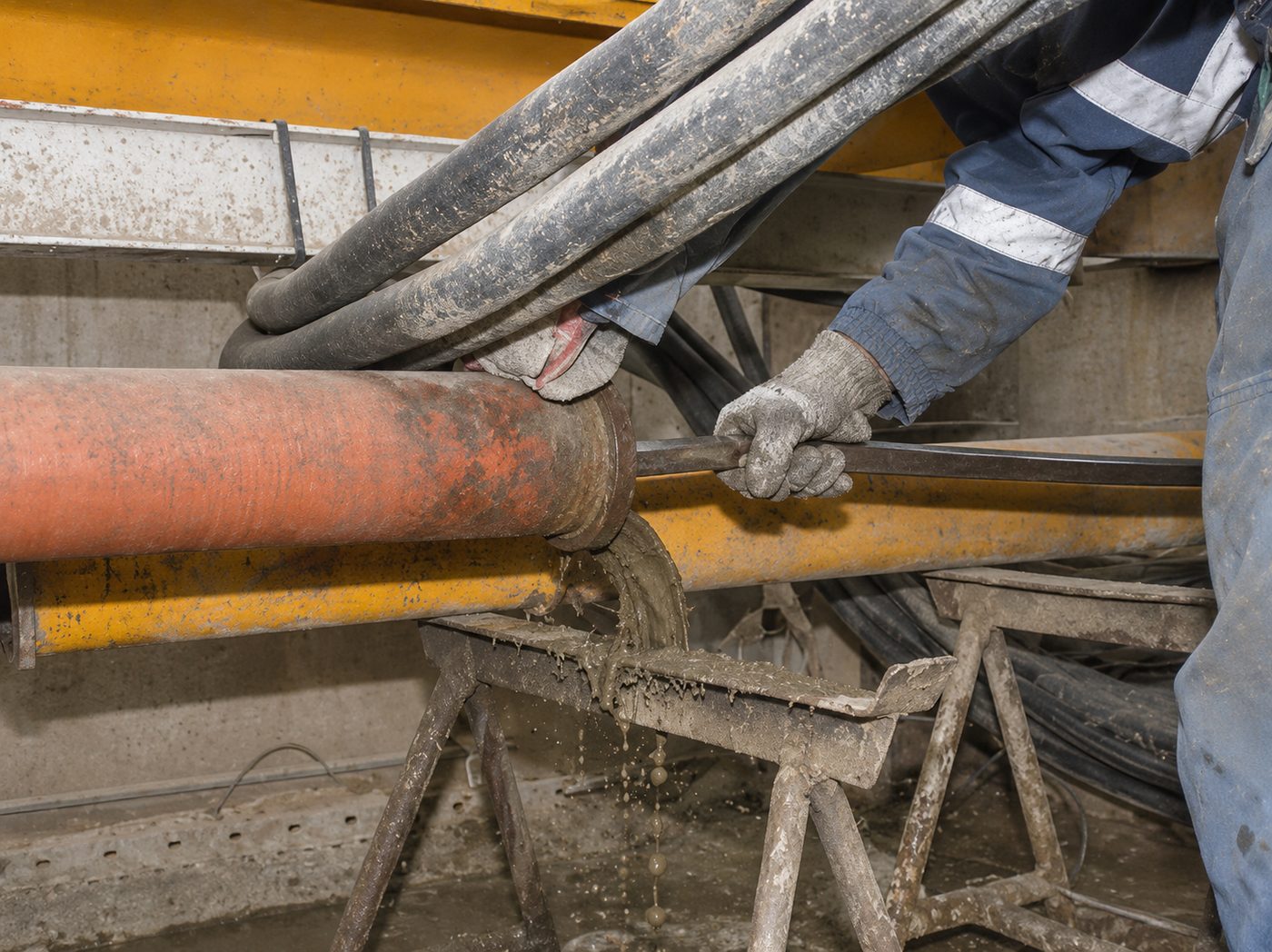
Four ways to empty the line
The concrete can be pushed out toward the pouring point, or back toward the pump. Which way, and with what, depends on the job.
- Compressed airA cleaning ball is blown through the line with air. Fast, and it needs no water at the far end.
- Reverse pumpingThe pump is run in reverse to draw concrete back into the hopper.
- Water wash-out for long linesFor very long or horizontal lines, the pump pushes water behind a cleaning plug. See the steps below.
- Free flowOn a vertical line, the concrete is allowed to run back down under its own weight.
Washing out a long line with water
- Prepare the cleaning plug, often called a go-devil.
- Clear the first meter of pipe at the pump end and insert the plug.
- Connect a high-pressure hose between the pump and the pipeline.
- Fill the hopper with water and pump. The water drives the plug, and the plug drives the concrete out ahead of it.
The concrete pushed out is still usable at the pour, so a wash-out done well wastes very little.
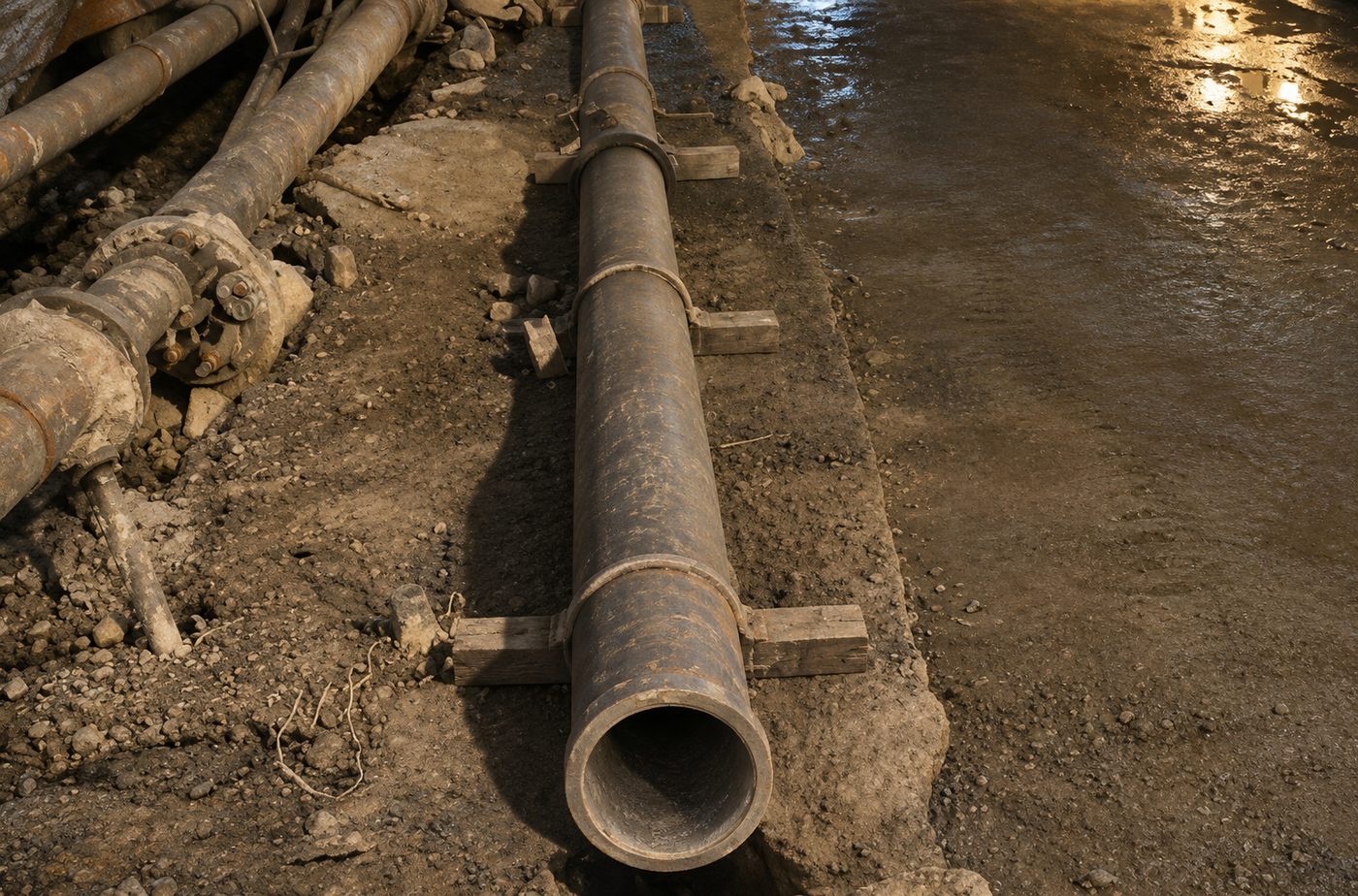
Inspect the wall thickness
Concrete wears steel. A delivery pipe gets thinner from the inside with every cubic meter, and a thinner wall holds less pressure. You cannot see this wear from outside, so it is measured with an ultrasonic thickness gauge held against the pipe.
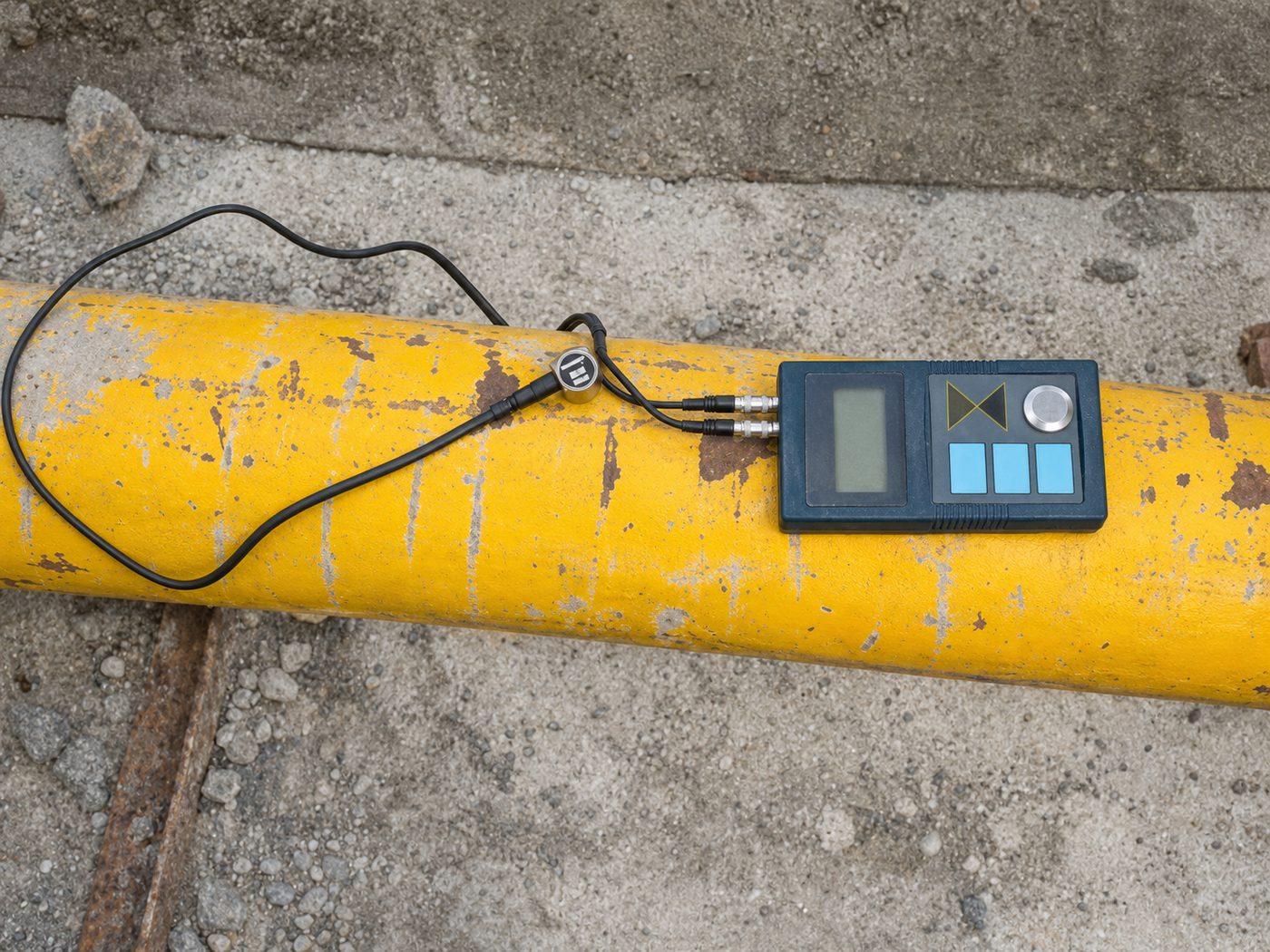
The minimum wall depends on the pipe's diameter, its steel and construction, and the highest pressure your pump can produce. Ask our service team for the limit that applies to your pipes and pump.
What to do with the readings
- Measure where wear is worst: the pipes nearest the pump, the outside of every bend, and the bottom of horizontal runs.
- Have each reading checked against the minimum for your pipe and pump. Our service team can give you that limit.
- Put the newest and thickest pipes nearest the pump. Pressure is highest there and falls toward the pour.
- Replace a pipe that is below the minimum wall, before it bursts, not after.
Need pipes, couplings or seals?
Tell us the line diameter and what you need replaced.