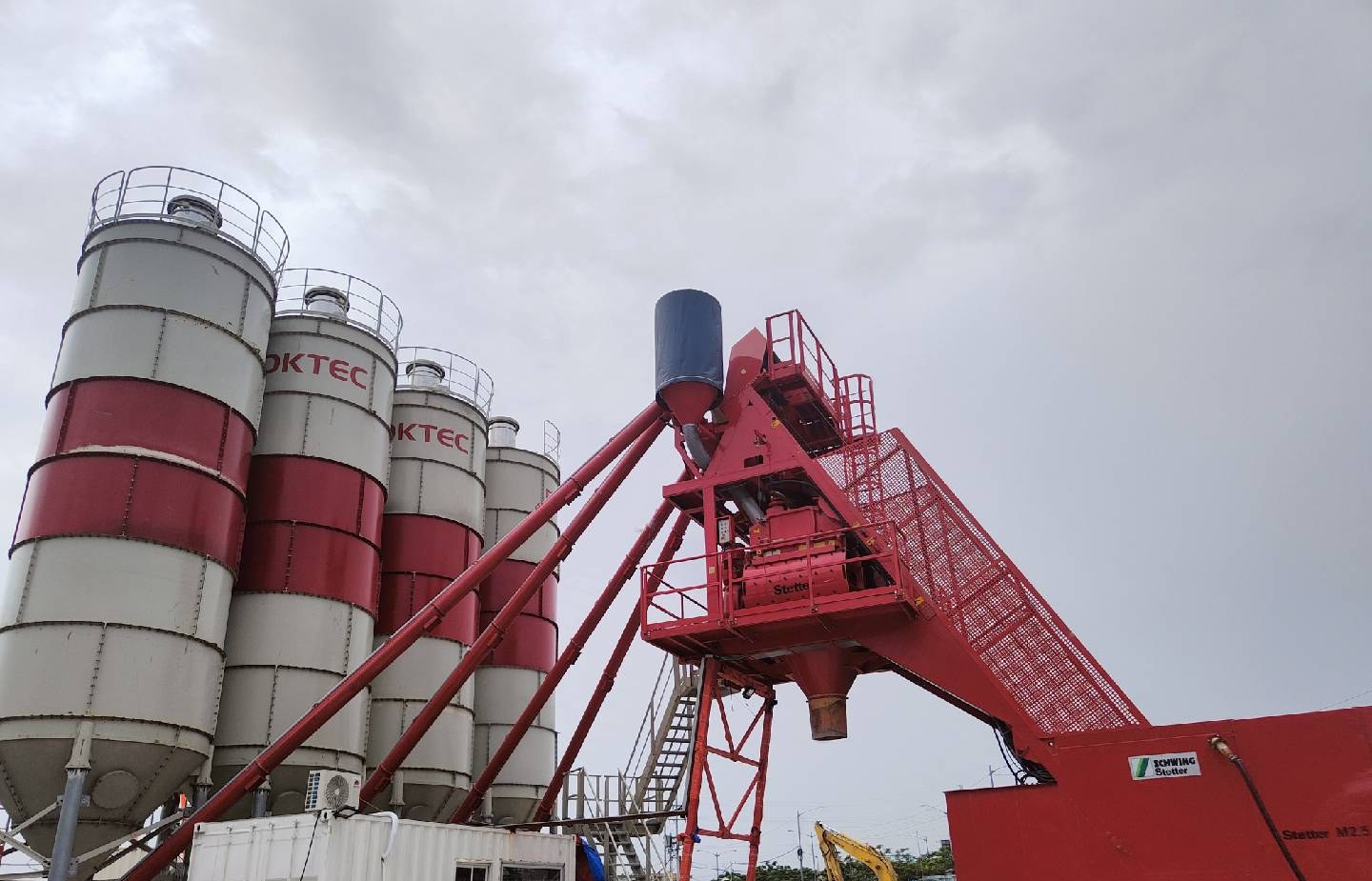
In September 2023, MACC and Schwing Stetter India handed over a Stetter M 2.5 batching plant to Godel Concrete & Systems. At its handover it was the largest Stetter batching plant in South East Asia. This is what the plant is, how it is laid out, and what a producer gains from a plant of this size.
What a ready-mix producer needs from a plant
A contractor batching for its own project can live with a small plant and a patient pour. A producer selling concrete cannot. Its plant has to load one transit mixer after another through the day, hold the same mix from the first truck to the last, and keep doing it when two or three customers are pouring at once.
That takes three things: a high hourly output, a mixer that turns out large batches quickly, and enough cement and aggregate in storage that the plant never waits for material.
Why the M 2.5
- 112 m³ an hour. At that rate the plant can fill a 7 m³ transit mixer about every four minutes, so trucks spend their time on the road and not in the queue.
- A twin-shaft mixer. Two horizontal shafts mix a large batch thoroughly in a short cycle and empty it fast. It is the mixer type used where a plant loads trucks all day.
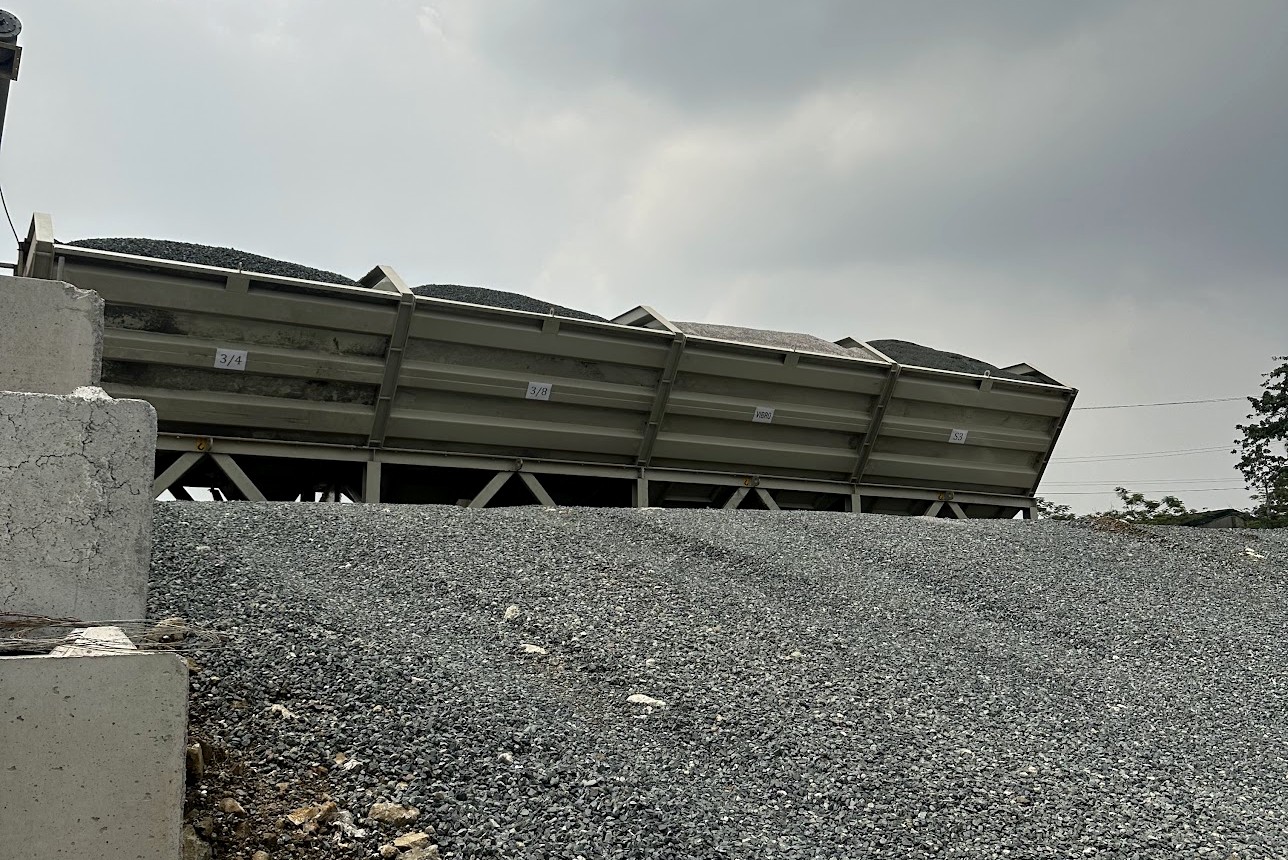
- An in-line aggregate silo. Sand and stone are stored in line with the mixer and weighed for every batch, so the plant is not waiting on a loader between batches.
- A mobile plant, not a permanent building. The M series is built as pre-assembled units that travel by trailer and go up with a mobile crane. A producer gets the output of a large plant and can still relocate it when the market moves.
Our guide on pan mixers and twin-shaft mixers explains why the mixer type matters as much as the scales.
How the plant is laid out
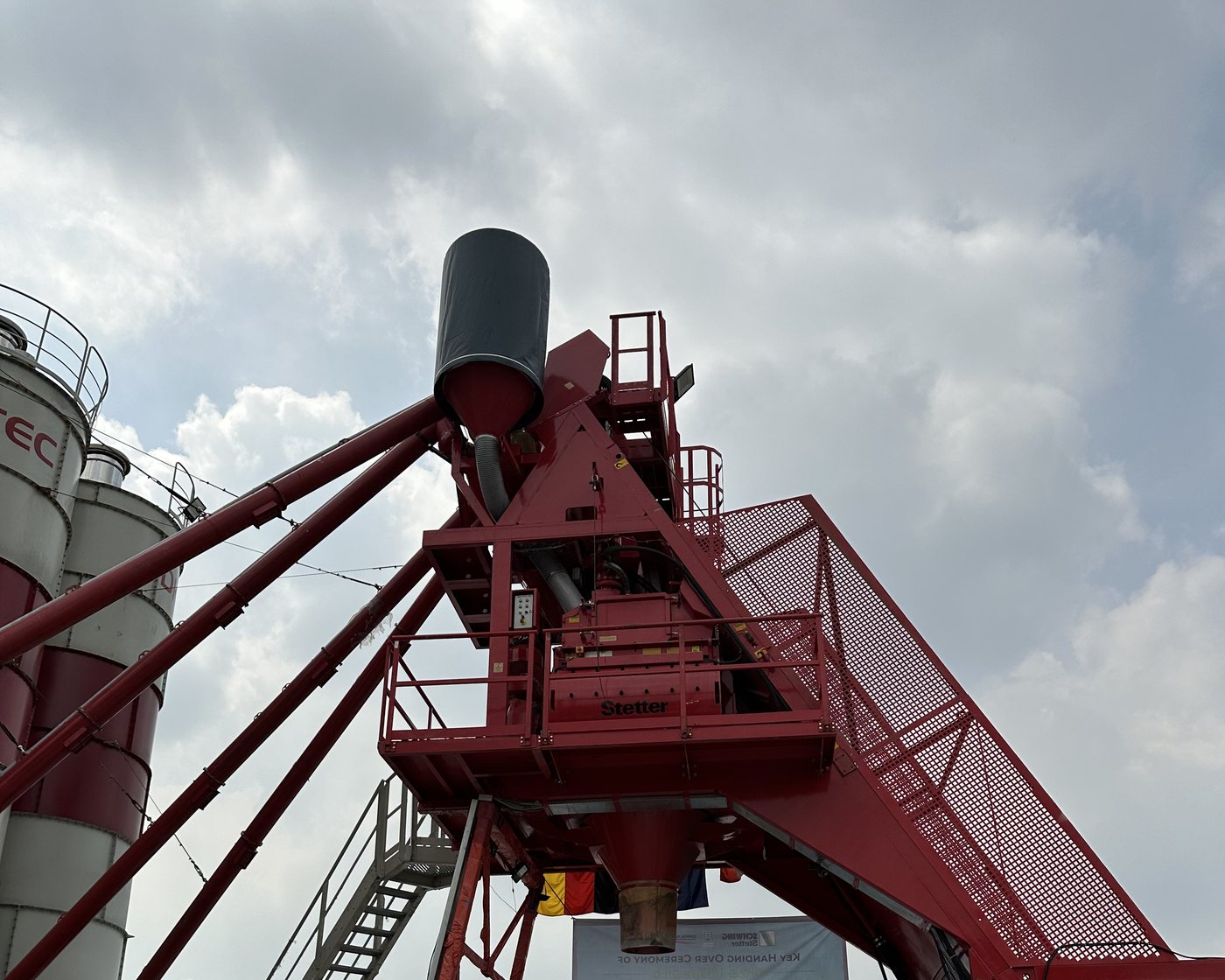
- CementFour silos stand beside the tower. A screw conveyor from each one carries cement up to be weighed above the mixer.
- AggregatesSand and stone are weighed at the in-line silo, then carried up the inclined conveyor into the mixer.
- MixingCement, water and aggregates meet in the twin-shaft mixer at the top of the tower.
- LoadingThe transit mixer drives under the tower and the batch drops straight into the drum.
The handover
The keys were handed over on site in September 2023, with representatives of Godel Concrete & Systems, Schwing Stetter India and MACC. The plant carried the flags of India, the Philippines and Germany: where it was built, where it works, and where Stetter began.
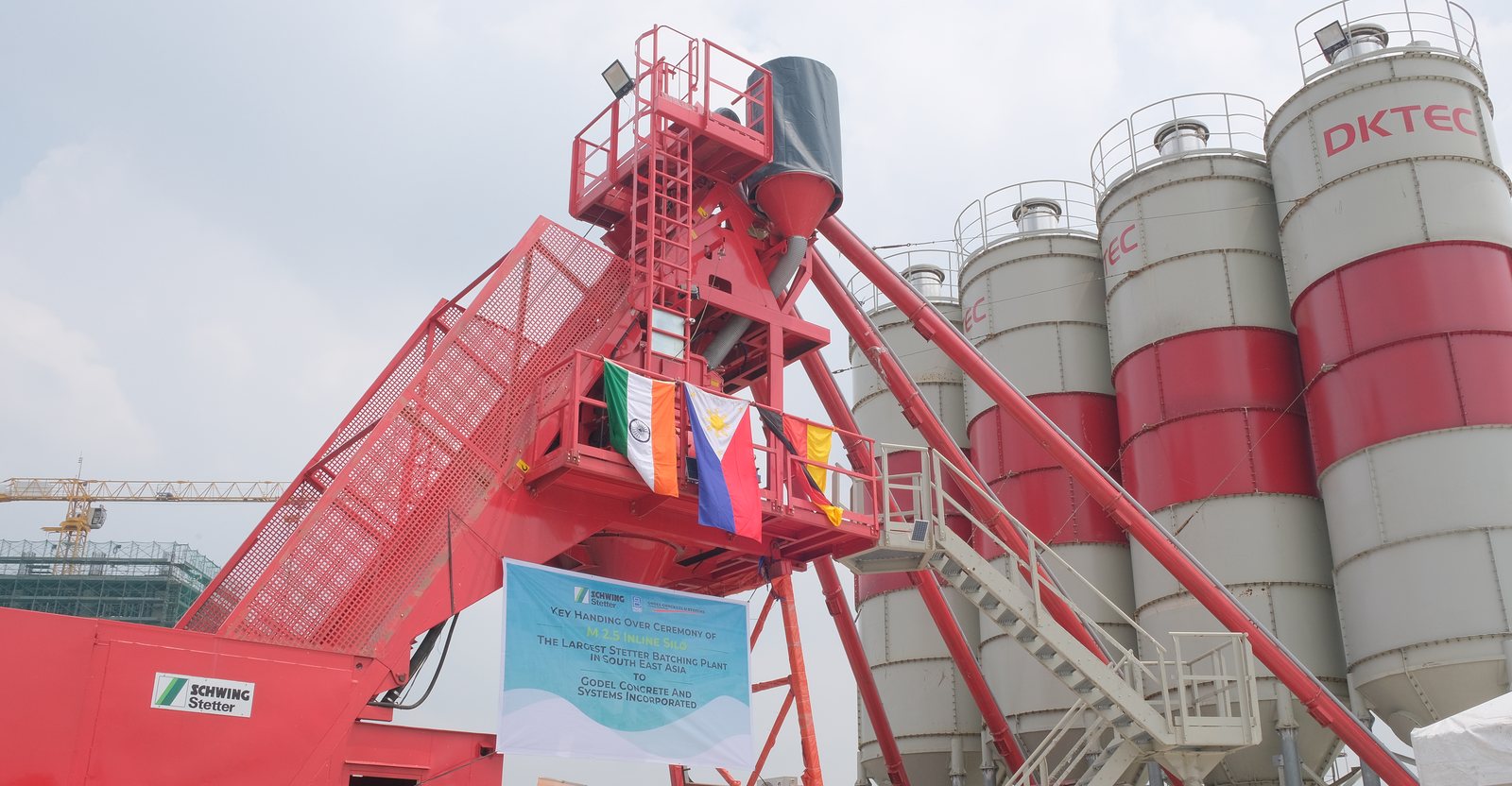
MACC installed and commissioned the plant, and supports it with parts and service from our workshop in Novaliches.
Is a plant this size right for you?
- Selling ready-mix, or supplying several large pours at once: the M 2.5, or the horizontal H and HN plants above it.
- Batching for your own projects, up to about 56 m³ an hour: an M1 mobile plant.
- One site, steady pours, limited space: a compact plant. See the case for the CP 18.
All of them are on the batching plants page, with outputs and mixer types side by side.
Planning a batching plant?
Tell us your daily volume and how many trucks you load an hour.