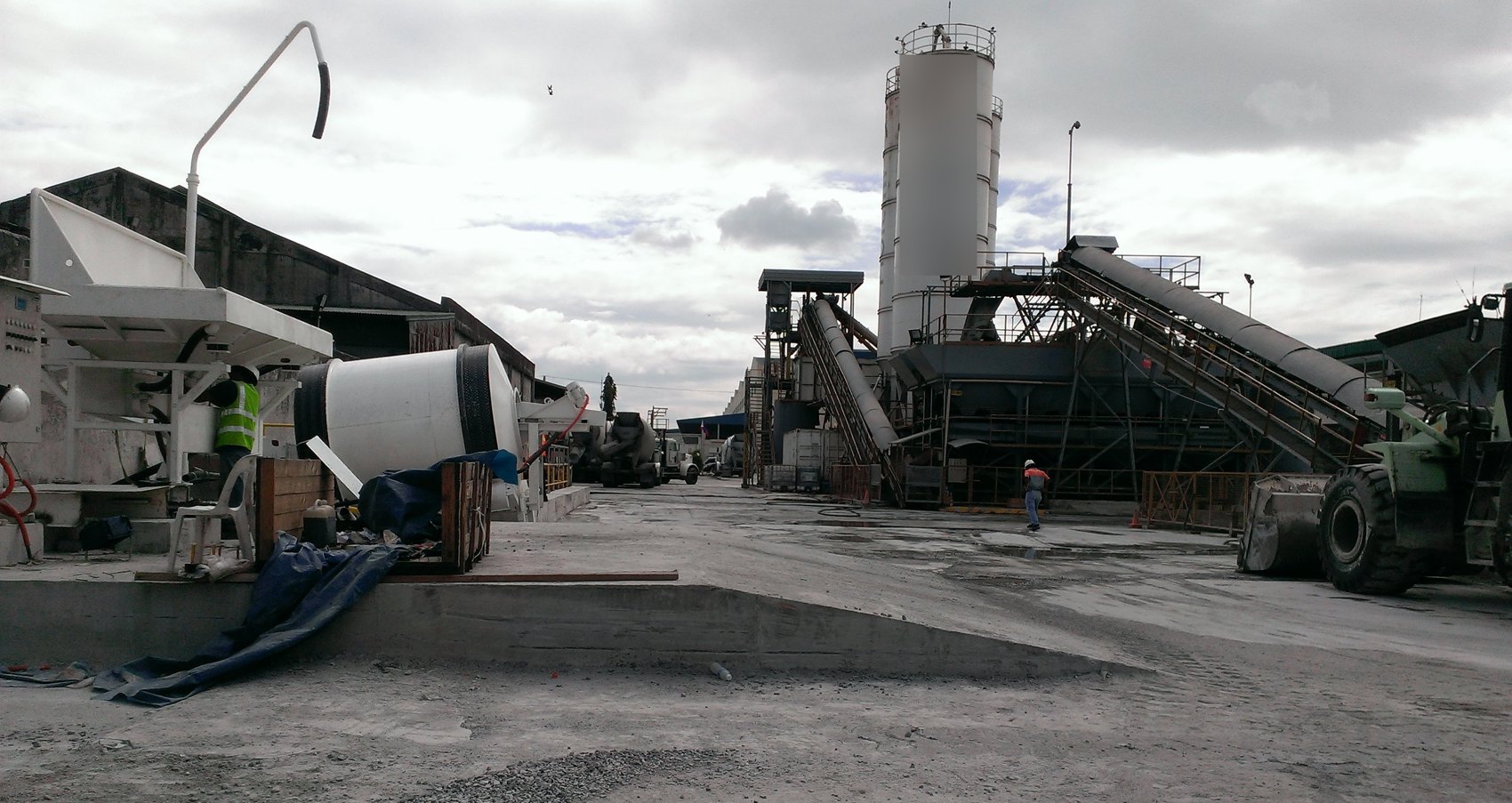
Every ready-mix yard ends the day with concrete nobody wanted: loads that came back, and the wash water from every drum. A recycling plant separates that material back into aggregate and water, so less of it leaves the yard as waste.
The problem it solves
Returned concrete and washout have to go somewhere. Left to harden, they become a pile to break up and haul away. Washed out on the ground, the cement-laden water becomes a problem of its own. Both are material the yard has already paid for.
How the RA 12 works
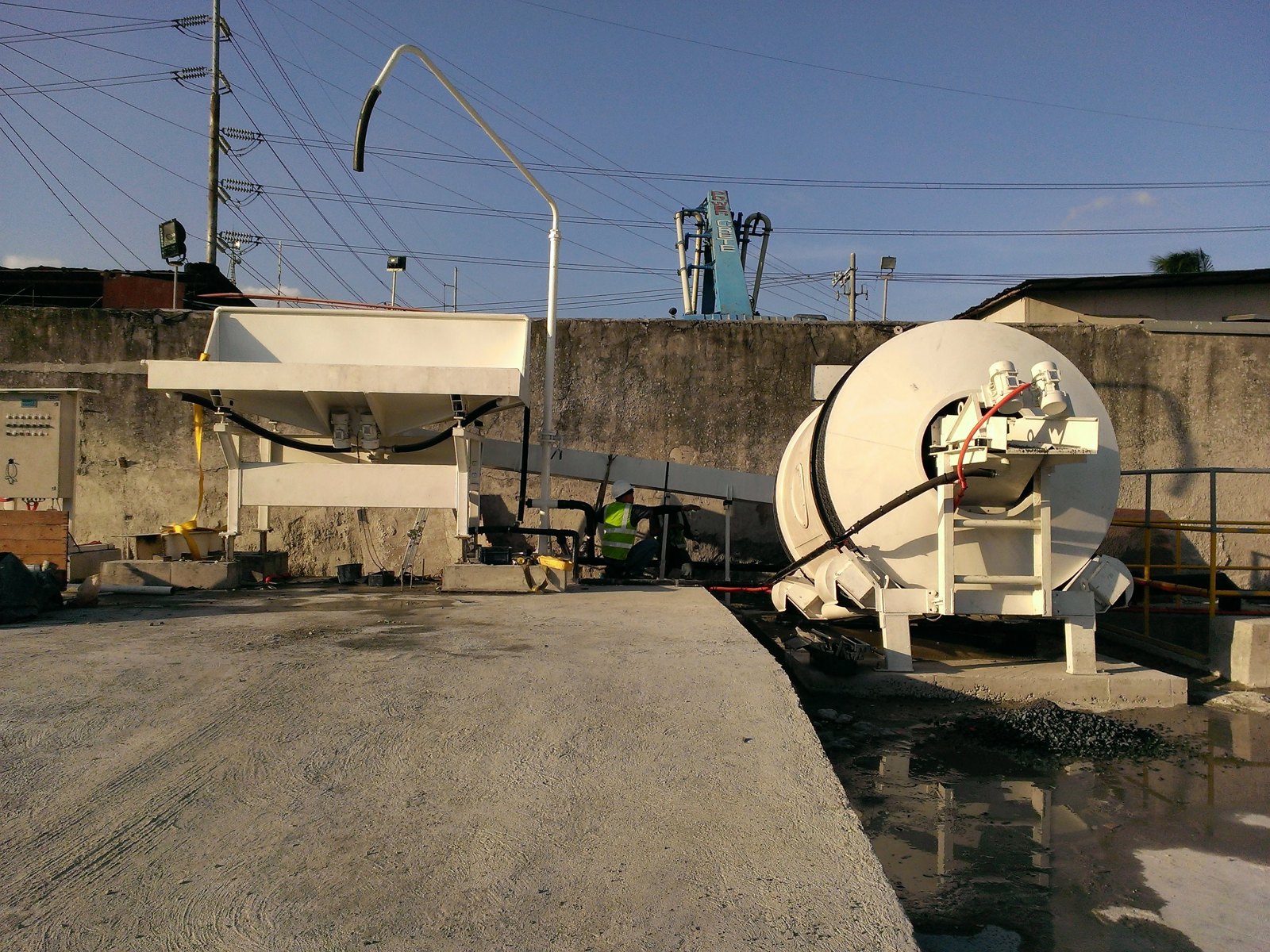
Schwing Stetter describes the RA 12 as a reverse-flow washing process. The leftover concrete goes into the feed hopper and through the washing drum, where flushing water separates it into two streams.
- Washed aggregate. Everything coarser than the 0.2 mm screen cut comes out of the drum as clean sand and stone.
- Water carrying the fines. Cement and the finest particles leave with the wash water, which is recovered.
The figures
| RA 12 | |
|---|---|
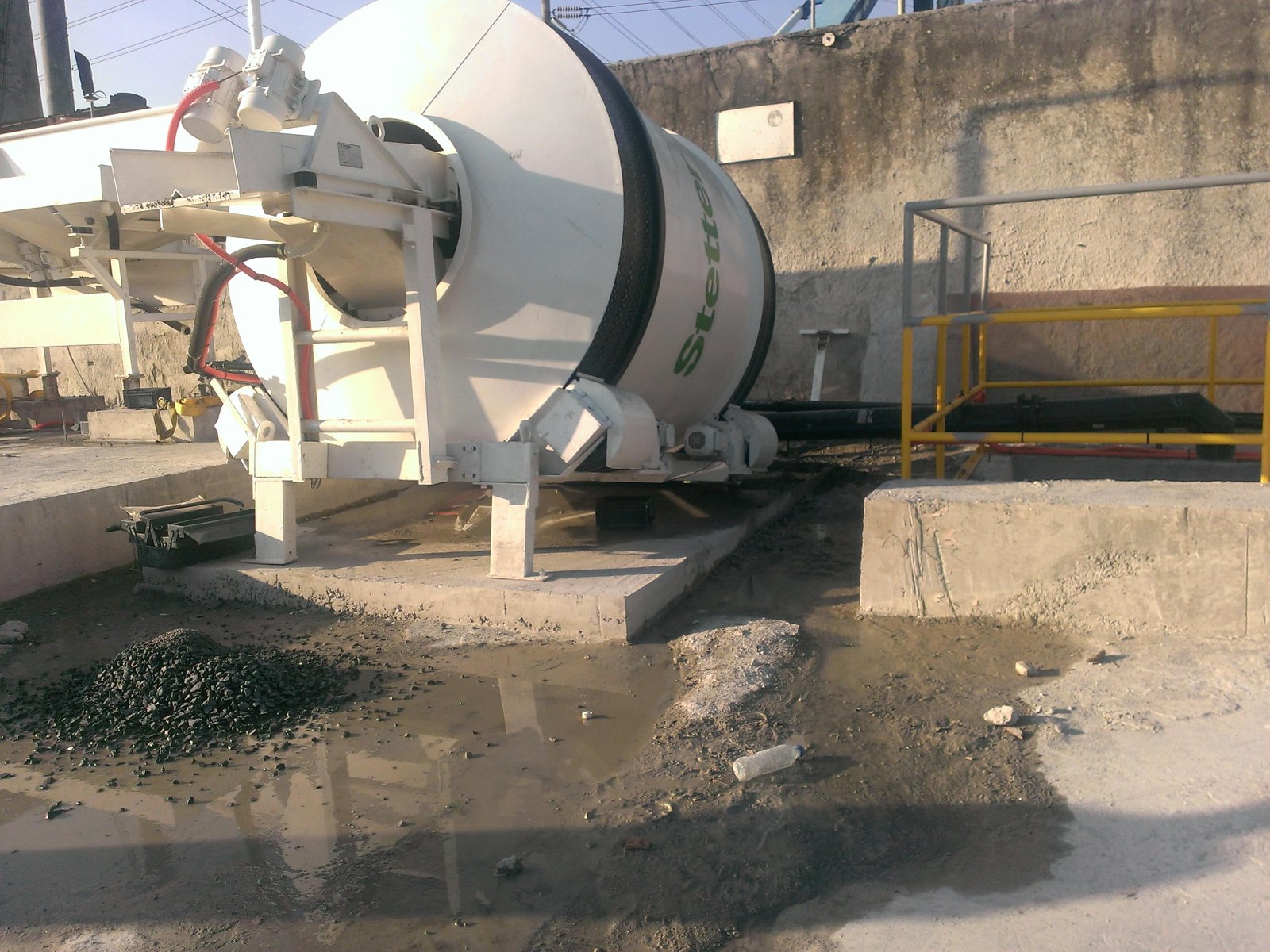
| Washing capacity, normal concrete | 12 m³/hr |
| Screen cut | 0.2 mm |
| Flushing water, adjustable | 7 to 12 m³/hr |
| Water held in the drum | 2 m³ |
| Washing drum motors | 2 x 2.2 kW |
| Connected load of the base system | 10.16 kW |
Figures are from Schwing Stetter India. A larger model, the RA 20, is also built.
What it means for a ready-mix producer
- Material you paid for comes back. Aggregate and water are recovered from returned concrete.
- Less waste to remove. There is less hardened concrete to break up and haul off the yard.
- A cleaner yard. Washout has a place to go that is part of the plant.
Related
Running a ready-mix yard?
Tell us how many trucks you wash out in a day and how much concrete comes back.