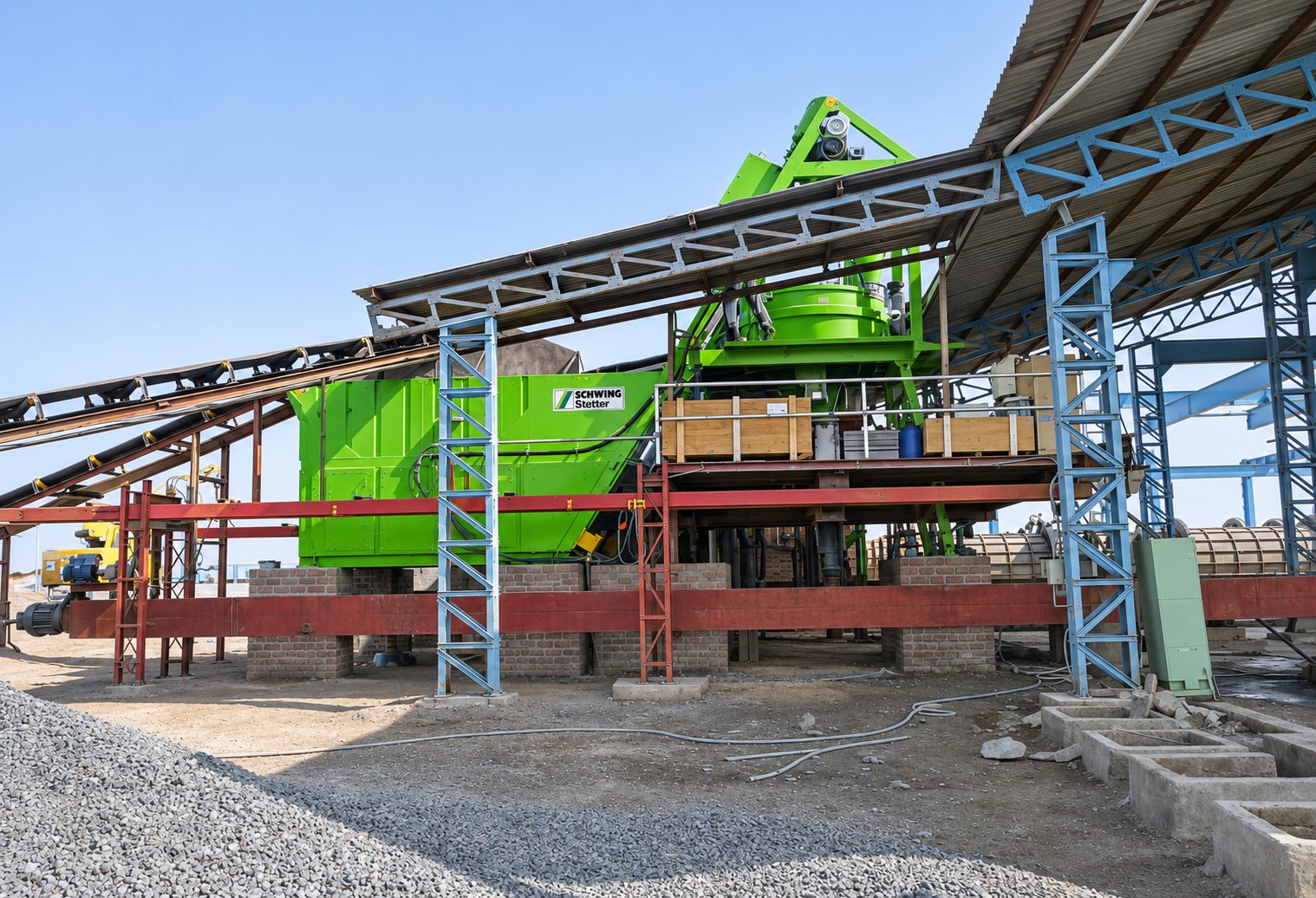
A CP 18 is usually sold as a contractor's plant: small, quick to set up, enough concrete for one project. At a pipe factory in Madhya Pradesh, India, two of them do something different. They feed a production line that has turned out 4,500 prestressed concrete pipes for an irrigation canal, each one five meters long and big enough to walk through bent over.
The job
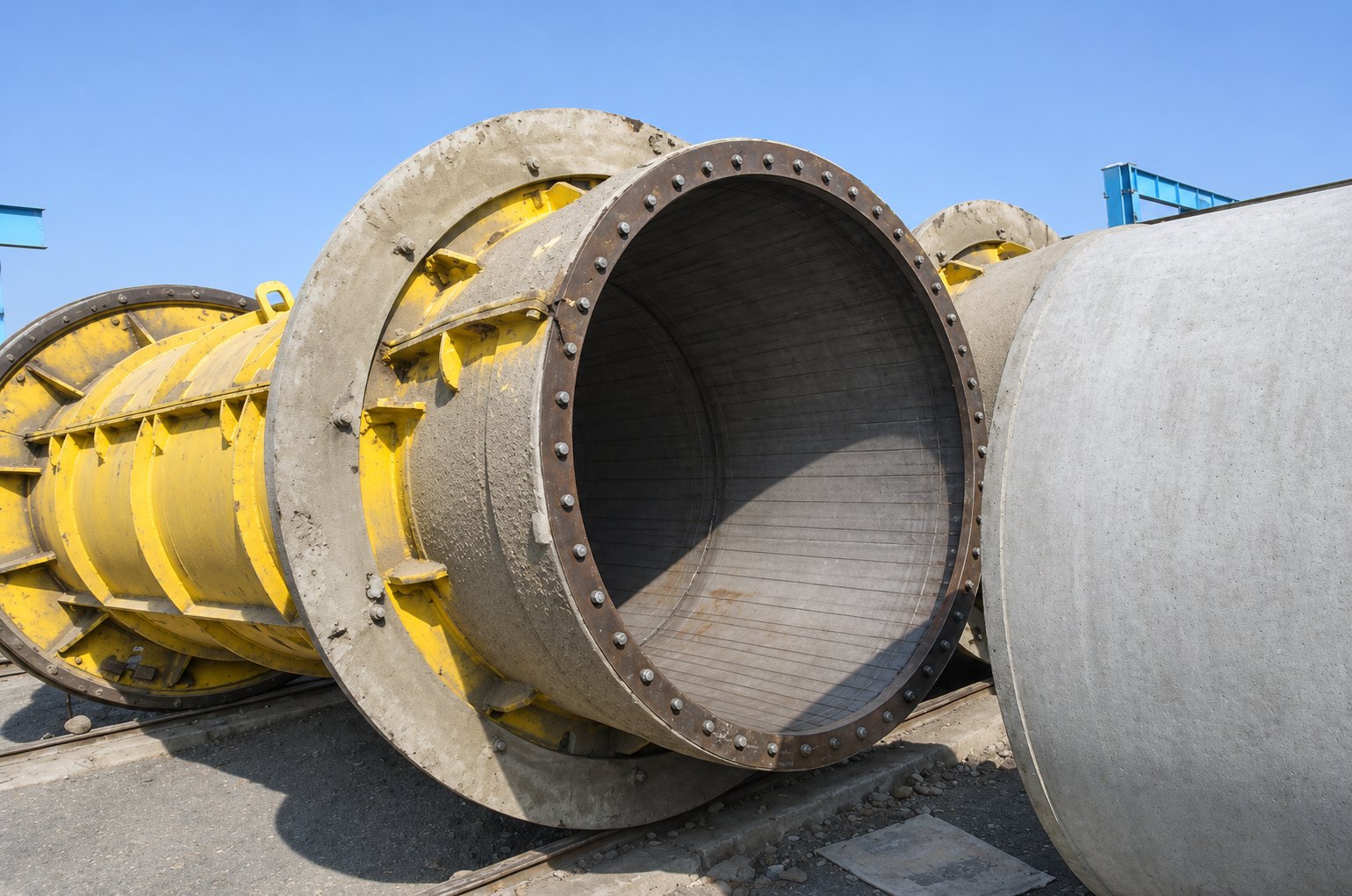
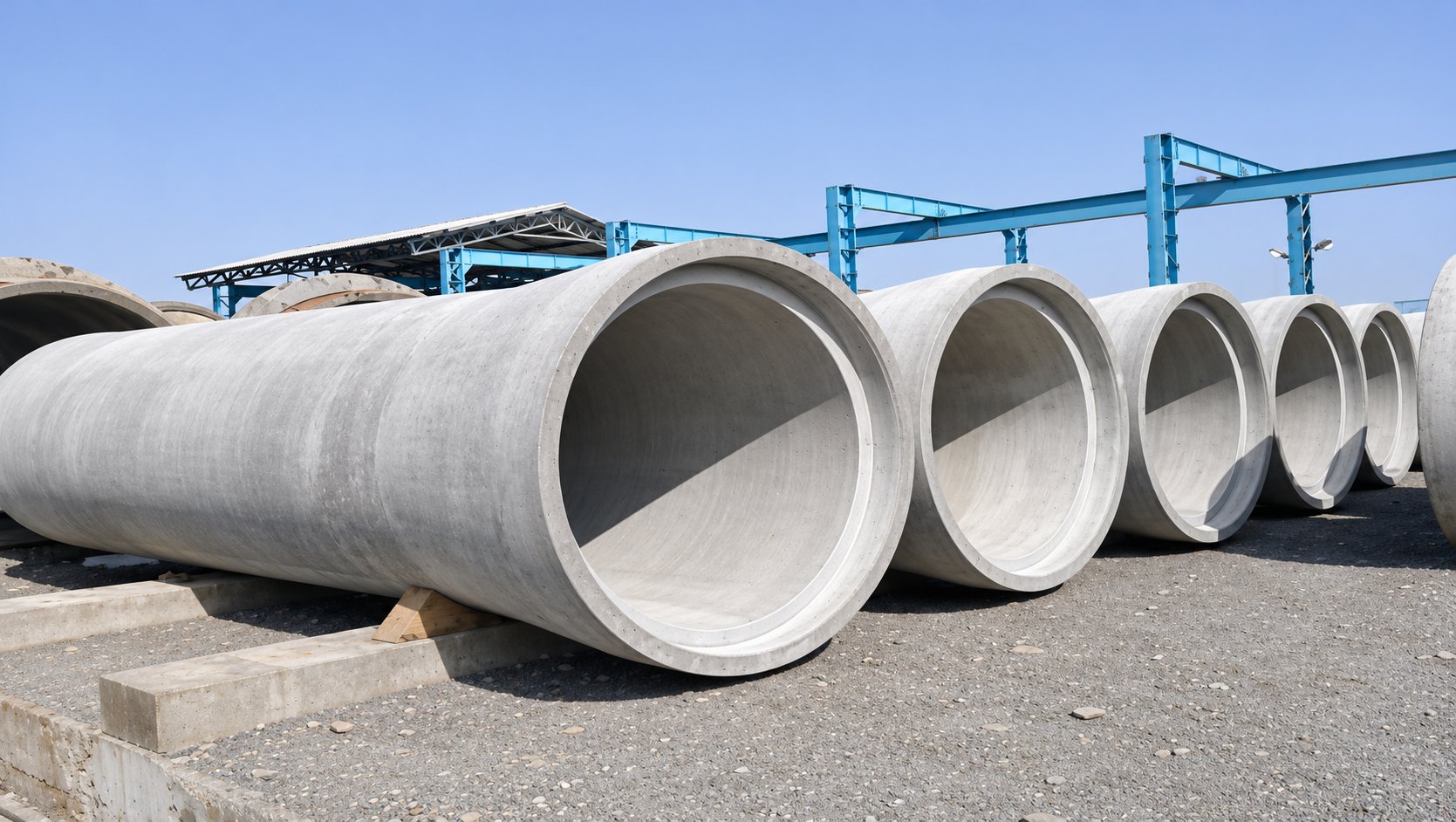
The pipes are for the canal network of the Indira Sagar Project on the Narmada River, which carries irrigation water across Madhya Pradesh. They are prestressed concrete pipes with a 1,600 mm bore and an 1,800 mm outside diameter, cast in 5,000 mm lengths. Each one takes 1.6 m³ of concrete, so 4,500 pipes is about 7,200 m³ placed one mould at a time.
The mix
Pipe concrete is rich and stiff. Every cubic meter here carries 500 kg of cement.
| Per m³ of concrete | Quantity |
|---|---|
| 20 mm aggregate | 960 kg |
| River sand | 960 kg |
| Cement | 500 kg |
| Water | 200 kg |
A mix like this leaves little room for error. Too much water and the pipe wall loses strength; too little cement and it fails its test. The CP 18 weighs aggregate, cement and water for every batch, so the last pipe of the day gets the same concrete as the first.
How the plant is built into the line
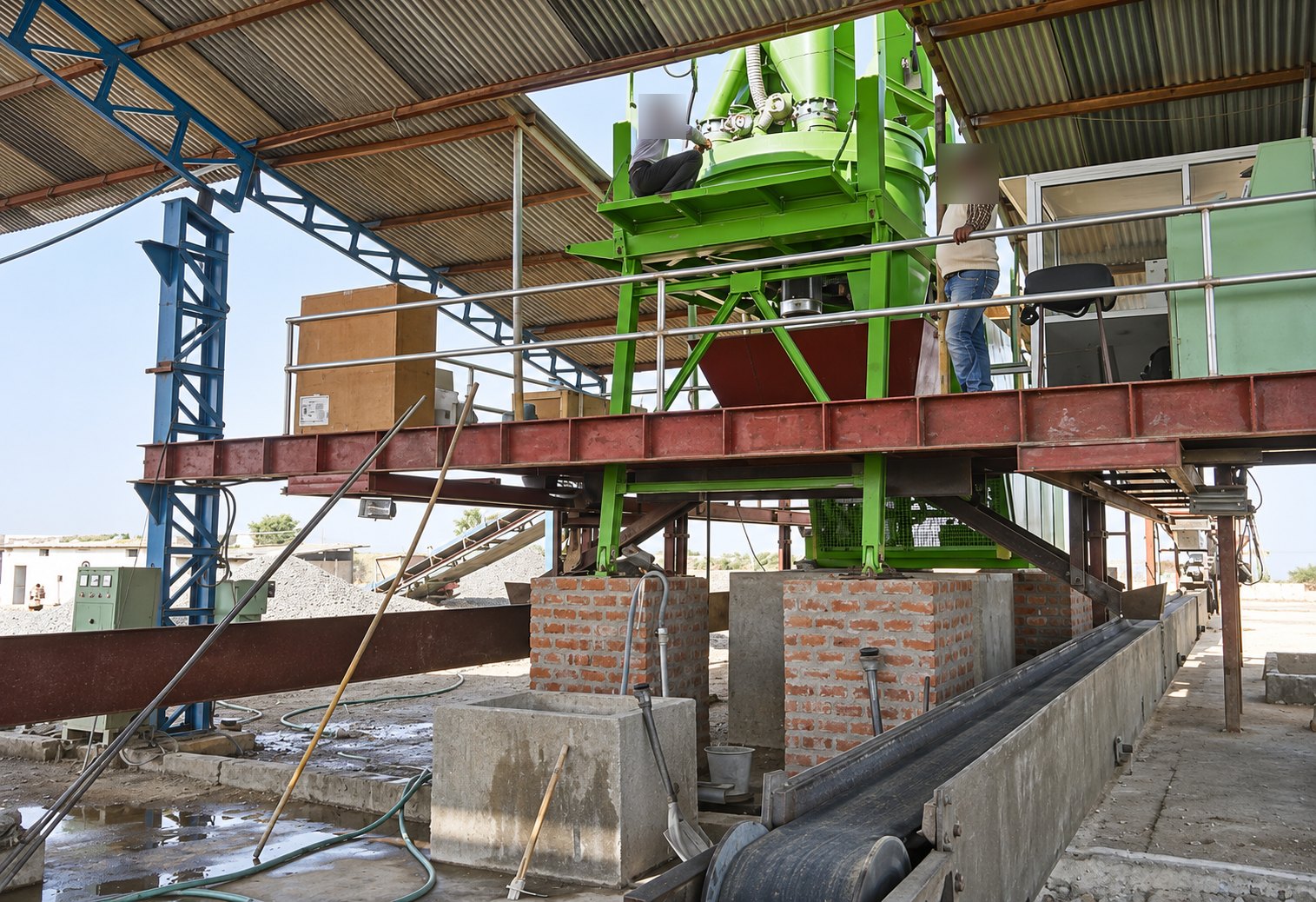
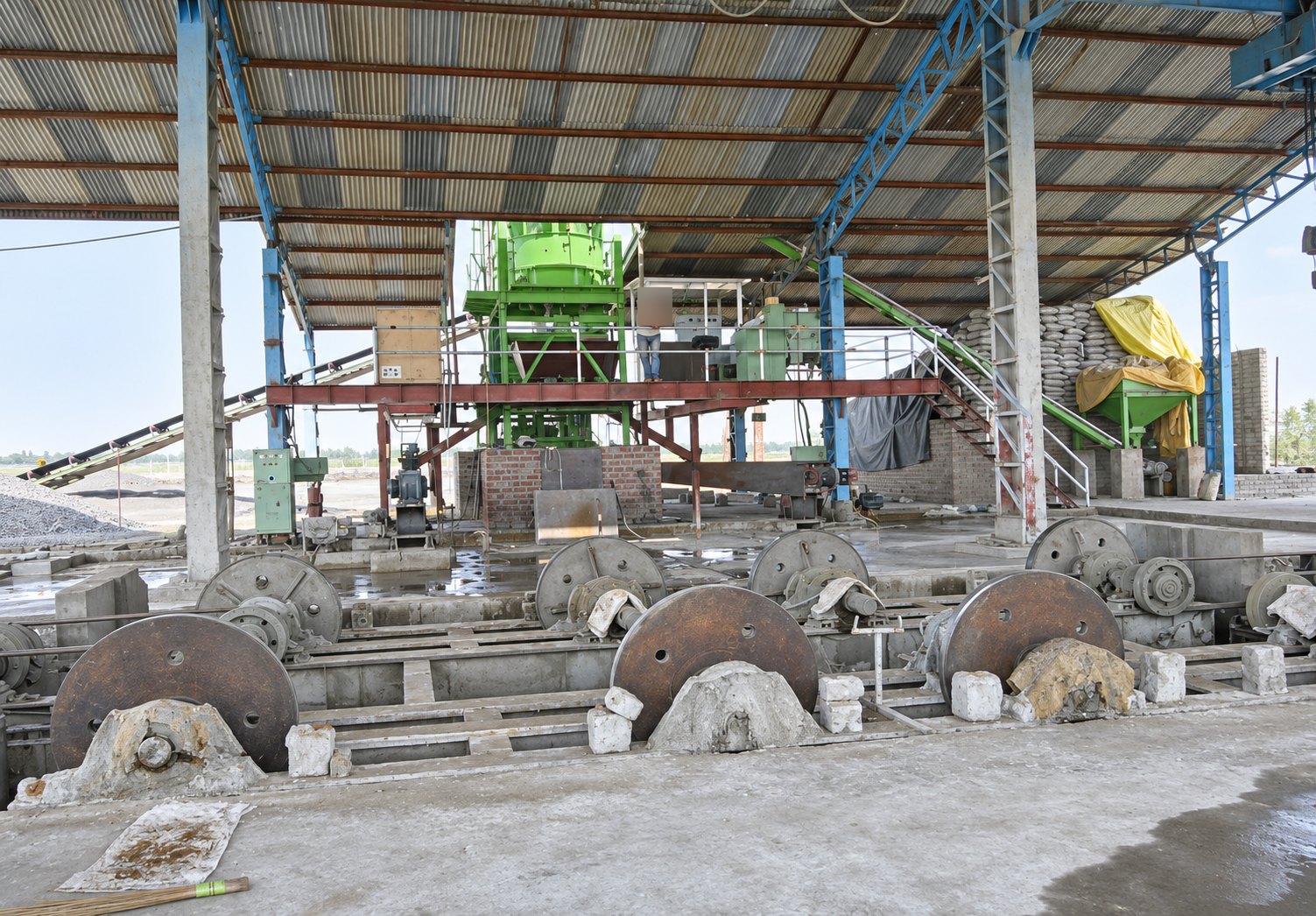
A pipe factory does not load transit mixers. The concrete has to travel a few meters, into a mould, many times a day. So the plant was raised on a platform and the discharge side was adapted to the line.
- Aggregate feed. Belt conveyors bring stone and sand from the stockpile to the plant.
- Mixing. The pan mixer sits on the platform. A CP 18 mixes 0.35 m³ at a time, so one pipe is about five batches.
- Discharge. An extended hopper under the mixer drops the concrete onto a belt conveyor at ground level.
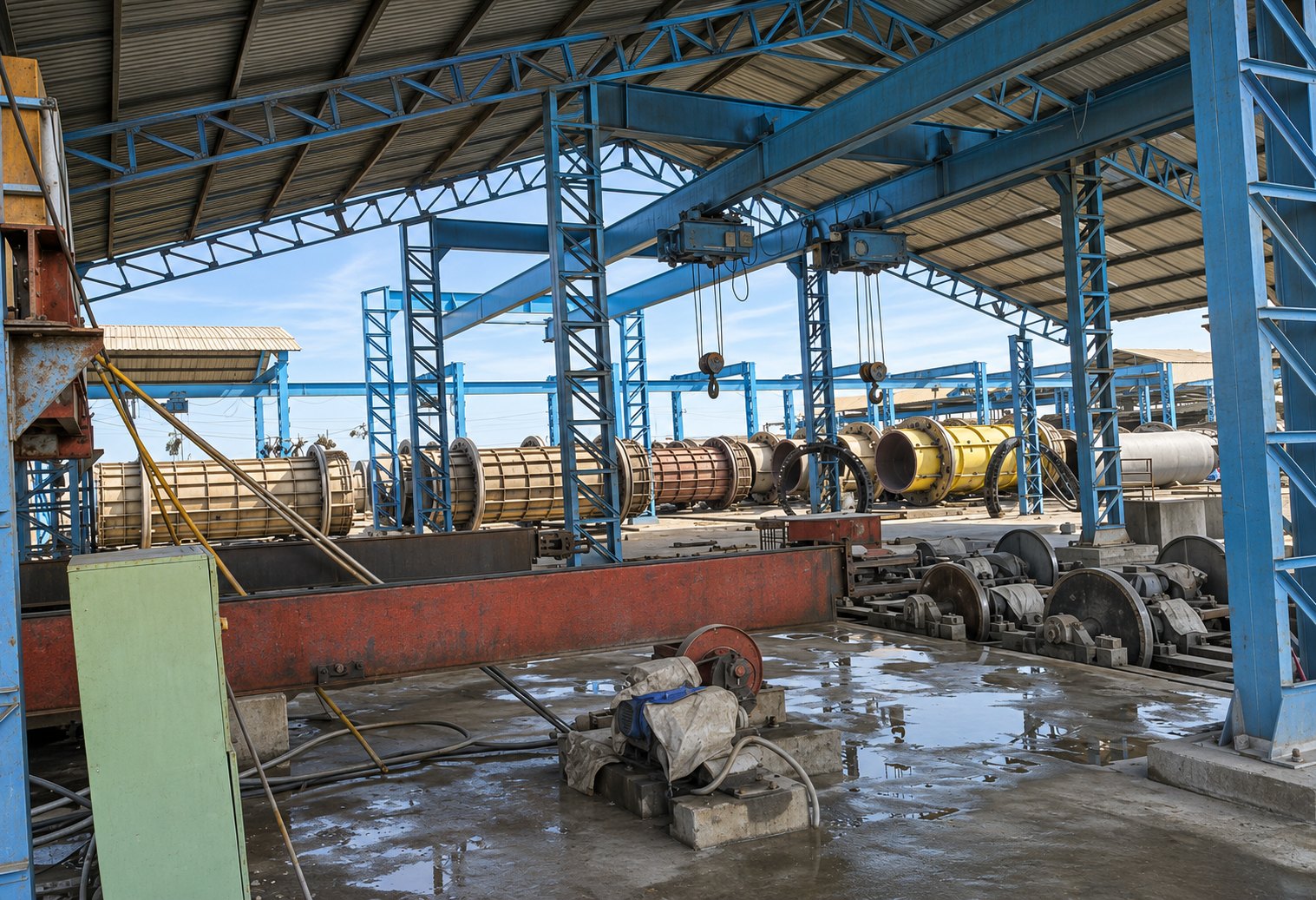
- Casting. The belt carries it to the moulds, which sit on a roller assembly for casting.
- Handling. Overhead gantry cranes lift moulds and finished pipes between stations.
What it shows about the CP 18
- It suits factories as well as sites. Pipes, culverts, blocks, poles and other precast work need steady, modest volumes of accurate concrete, which is what an 18 m³ an hour plant gives.
- It can be built into your process. The plant can stand on a raised platform or over a pit, and discharge into a truck, a pump, a skip or a conveyor.
- Two small plants can beat one large one. With two, the line keeps running when one is stopped for cleaning or service.
Related
Making precast or pipes?
Tell us what you cast and how much concrete you use in a day.