Most self-loading mixers look alike in a brochure: a drum, a loading shovel, a cab, four big tires. The differences that decide whether the machine earns money show up later, on a wet site, with one operator and a pour that has to pass inspection. These are the eight things worth checking before you sign, and what the Stetter SLM 4000 offers on each.
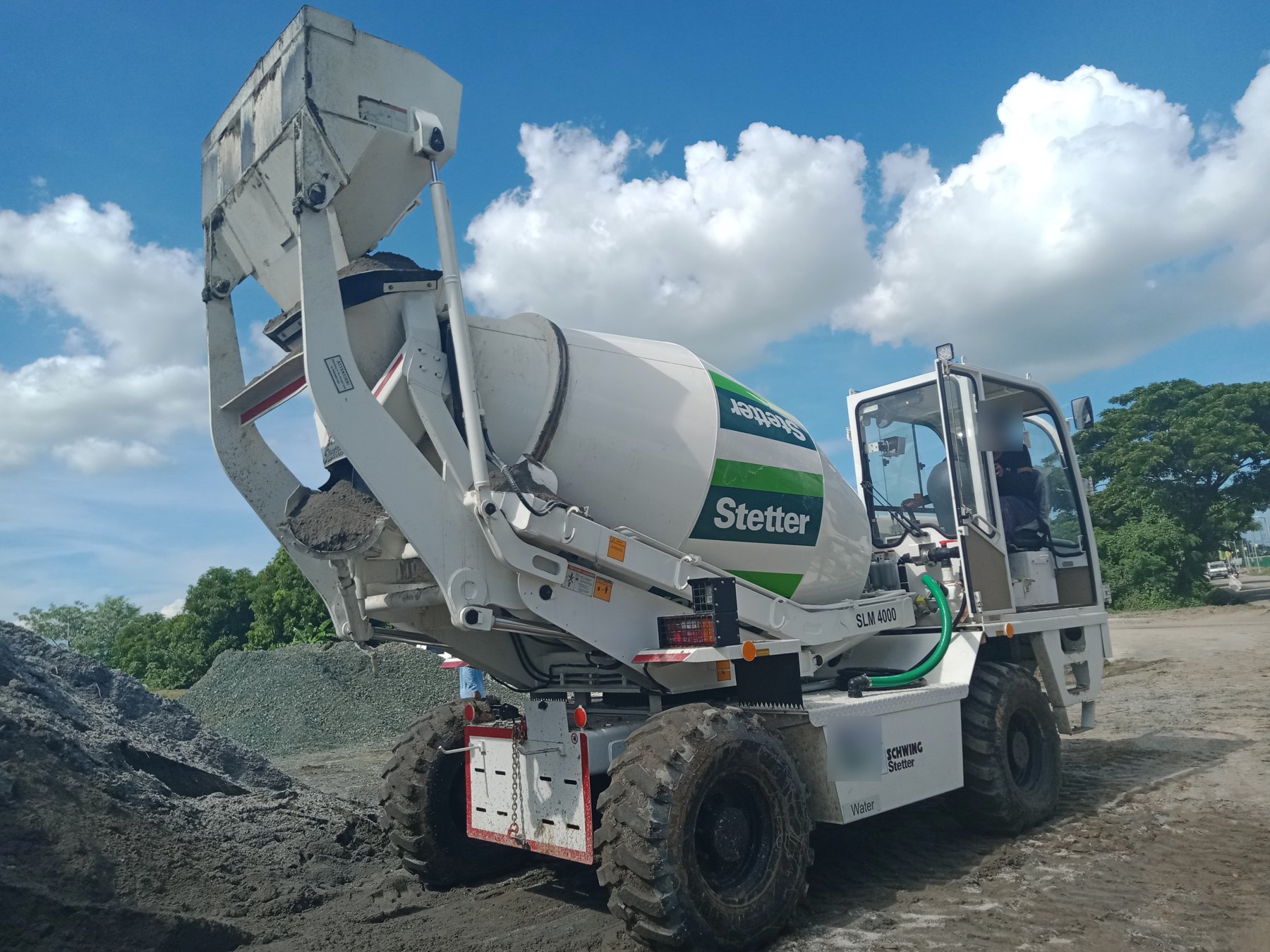
1. How does it weigh the batch?
A self-loading mixer is a batching plant on wheels, so start with the batching. If the machine only estimates by shovel count, strength varies from load to load and you pay for it in extra cement or failed cylinders.
- Is every ingredient weighed, or is the mix judged by the number of shovels?
- Can the operator see the weight build up while loading?
- Is water metered into the drum, or poured by eye?
- Can you get a record of what went into each batch?
2. What does the shovel actually deliver to the drum?
Shovel size on paper matters less than how much of each scoop reaches the drum. Material that spills on the way up is material you weighed and then lost.
- How many liters does the shovel hold?
- Is there a gate that controls the flow into the drum?
- How is sticky or wet sand cleared from the shovel?
- How many scoops make a full load, and how long does a full loading cycle take?
3. How much concrete per hour, honestly?
Drum size sells machines, but output per hour pays for them. Ask for the output with one operator doing everything: loading, mixing, driving and pouring.
- What is the real mixed-concrete output per load, not the geometric drum volume?
- What output per hour should you expect on a normal site?
- How fast does the drum turn for mixing and for discharge?
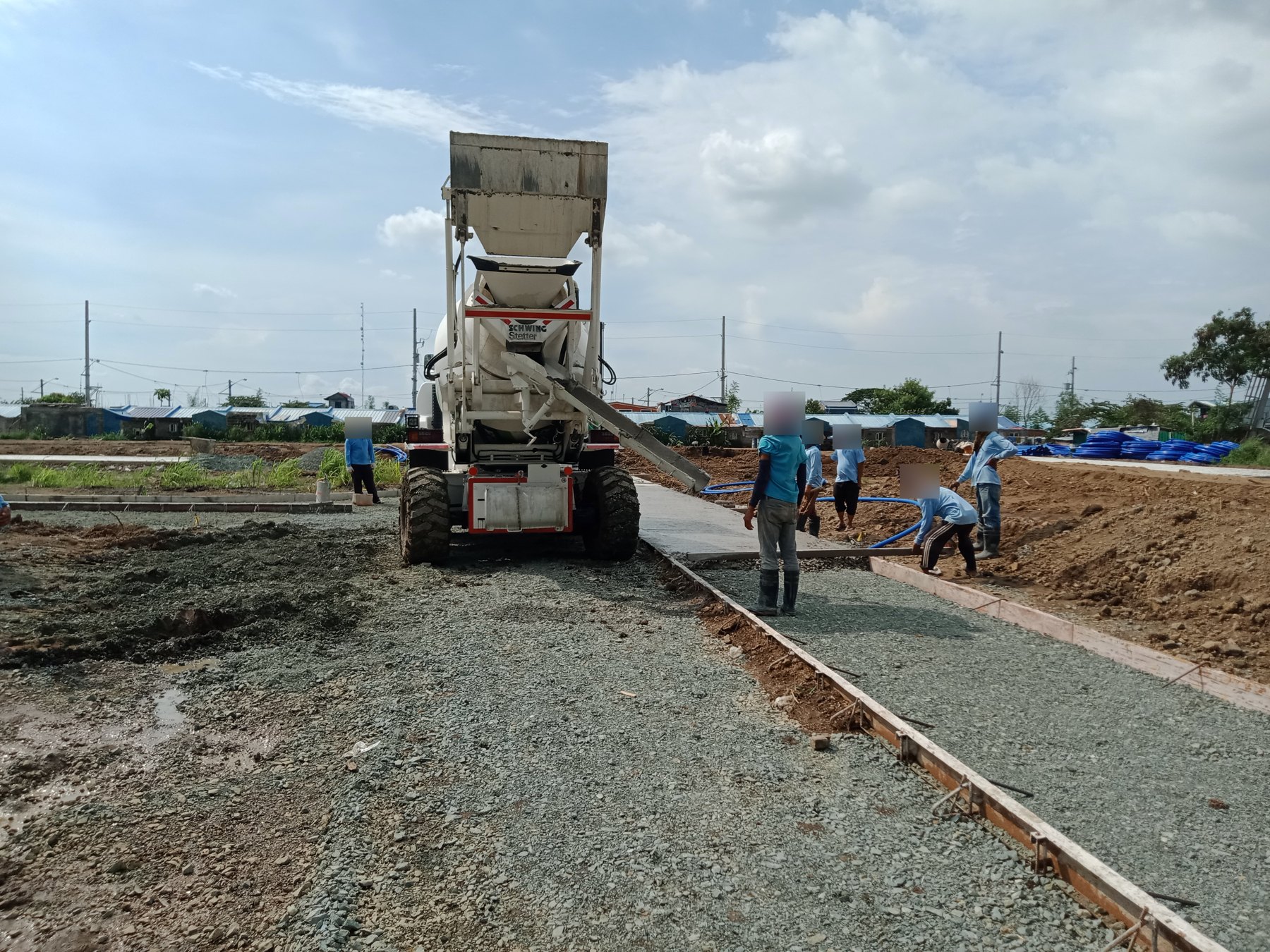
4. Where can it place the concrete?
A machine that can only pour straight behind itself has to be repositioned for every bay. One that can swing its drum pours along a road, into a trench or over formwork without moving.
- Does the drum slew, and through how many degrees?
- How long is the discharge chute, and does it fold for travel?
- How high can it discharge, for example into a pump hopper or over a form?
5. Will it reach your site, and stop when it gets there?
These machines work where ready-mix trucks cannot go. Check the drive, the climb and the brakes with a full drum, not an empty one.
- Is it 4-wheel drive, and what slope can it climb loaded?
- How does it steer, and what is the turning circle on a narrow site road?
- What kind of service brake and parking brake does it have?
- What tire size does it run, and can you get that tire locally?
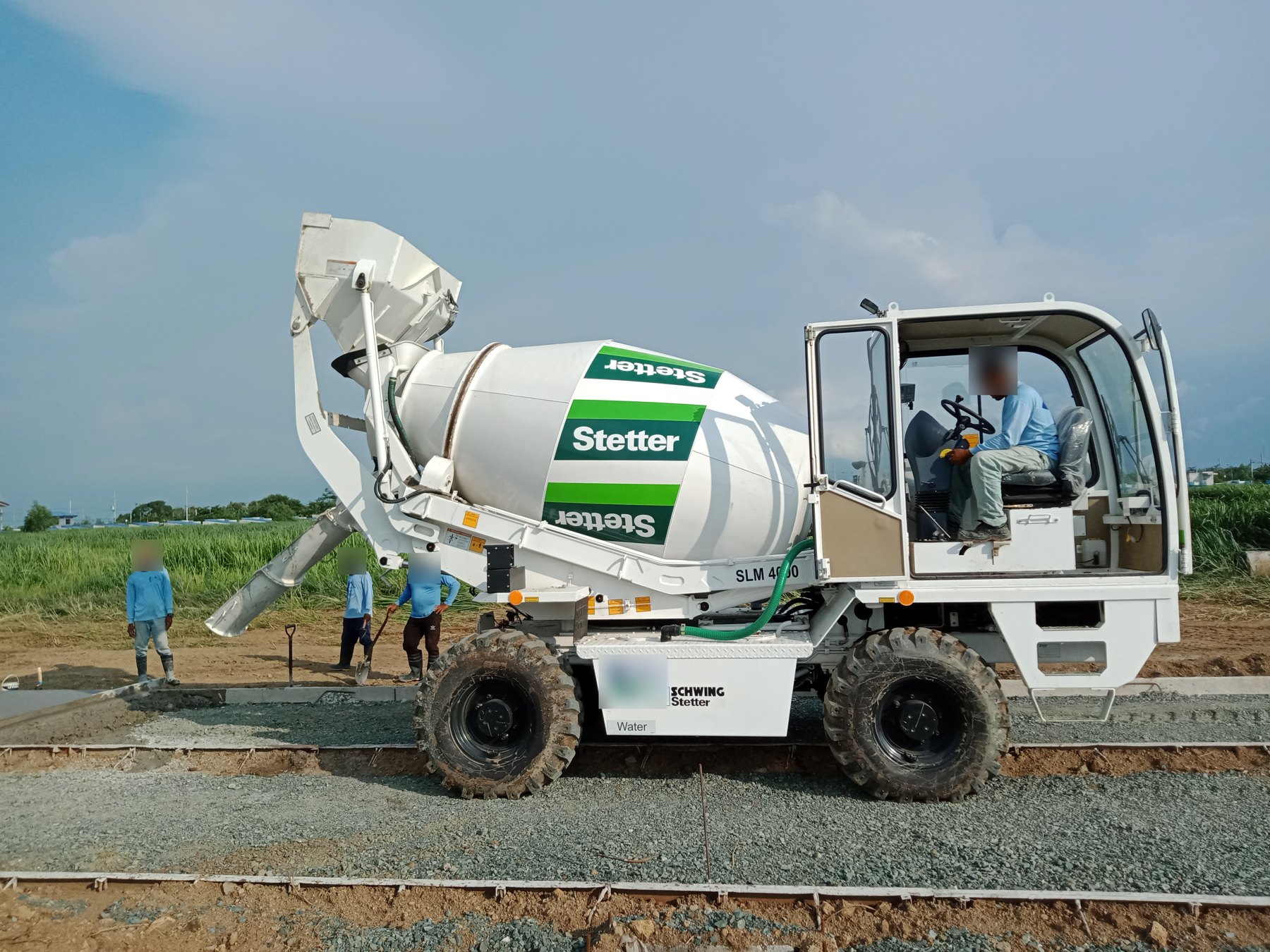
6. Can one operator run it all day?
The operator loads, weighs, mixes, drives and pours without leaving the seat. Sit in the cab before you buy. Controls that are easy to reach and easy to learn cut mistakes and training time.
- Are mixing and discharge switched from the seat?
- How is forward and reverse selected, since the operator changes direction constantly while loading?
- What can the operator see behind and beside the machine, and is there a camera?
- Which comfort items are standard, which are options, and which will you have to maintain?
7. What does it take to keep it running?
A self-loading mixer has more moving joints than a transit mixer: shovel arms, drum slewing, drum rollers. Every extra system is also one more thing to service, so ask what daily care looks like.
- How many grease points are there, and how are they reached?
- How is the drum washed out, and how much water does the machine carry?
- Which wear parts are replaced most often, and what do they involve?
8. Who stands behind it after delivery?
This is the question that separates one purchase from another more than any specification. A machine that waits weeks for a part produces nothing.
- Who commissions the machine and trains your operator?
- Where is the workshop, and will a technician come to your site?
- Is the seller the authorized dealer for the brand, with access to factory parts and technical support?
- Can you see a unit that has been working in the Philippines for several years?
Take the checklist to every seller
Ask every supplier the same eight questions and write the answers side by side. Then ask for a demonstration with your own sand and gravel, and time one full cycle from the first scoop to the end of the pour. The numbers you see on your own site are the ones to buy on.
Related
Want to see an SLM 4000 work?
Tell us where your site is and how much concrete you pour in a day.