The first question contractors ask about a stationary pump is how many cubic meters it delivers in an hour. For a building, the better first question is how much pressure the pipeline needs.
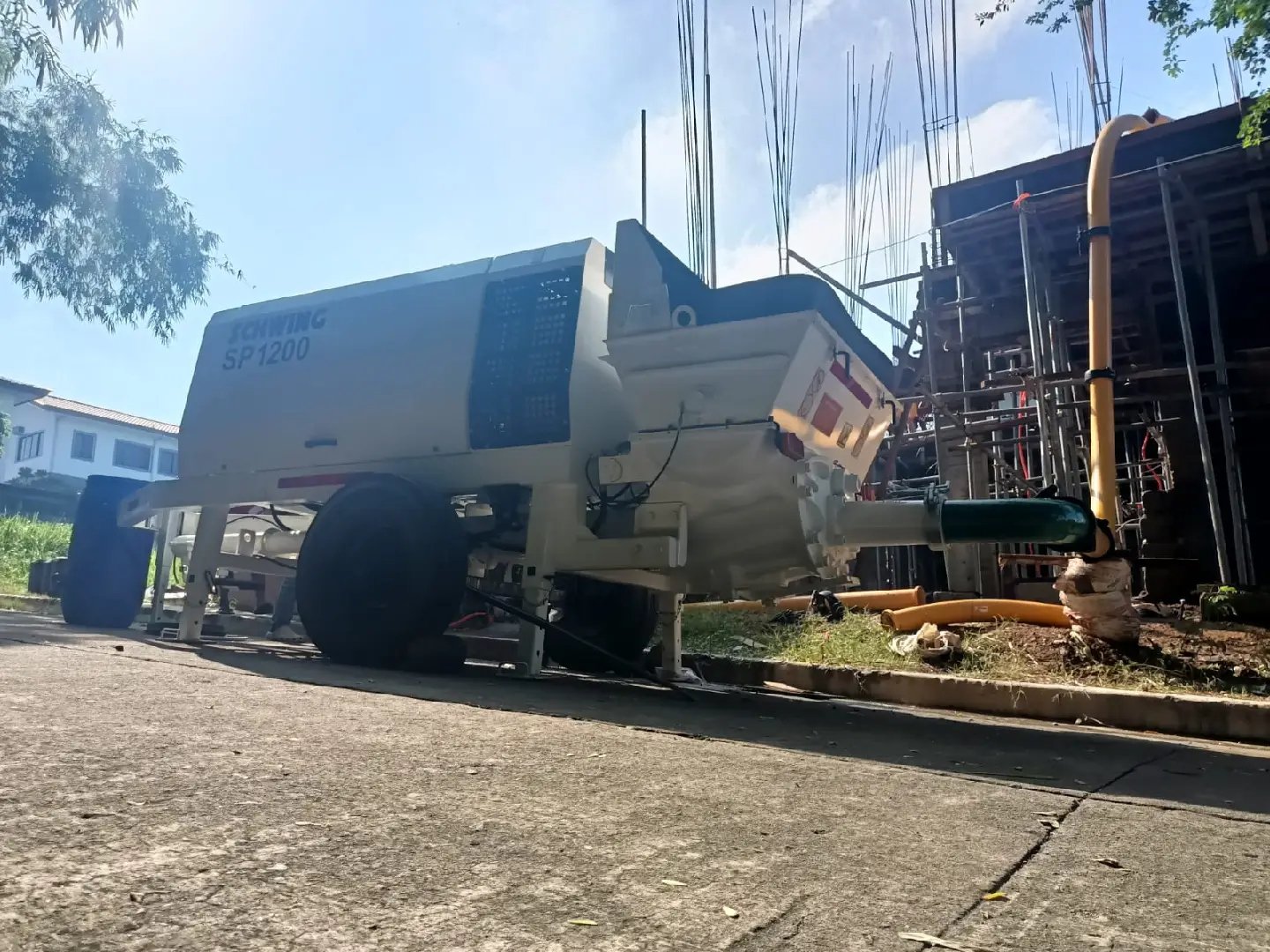
The pump has to overcome the whole pipeline
Height is only part of the load. Every meter of pipe, every elbow and every coupling adds resistance. For standard 125 mm pipeline, this rule of thumb gives a first estimate.
| Part of the line | Pressure to allow |
|---|---|
| Start-up | 20 bar |
| Vertical rise | 0.25 bar per meter |
| Pipeline length | 1 bar per 20 m |
| Each 90° elbow | 1 bar |
| Each coupling | 0.1 bar |
| End hose | 2 bar |
| Safety margin | Add 10% |
A worked example: 200 m up, 60 m along
Height takes about half. The rest comes from parts of the line that are easy to forget: the start-up, the couplings and the elbows. A job that looks like a 50 bar job is really a 103 bar job.
Matching the pump to the pressure
| Model | Max. pressure | Max. output | Suits |
|---|---|---|---|
| SP 1200 D | 64 bar | 45 m³/hr | Low-rise and mid-rise work |
| SP 1400 D | 102 bar | 51 m³/hr | Taller pours and longer pipelines |
| SP 1807 D | 105 bar | 66 m³/hr | Tight city sites and ready-mix yards |
| SP 1800 D | 112 bar | 73 m³/hr | Long horizontal and vertical distances |
| SP 2800 D | 119 bar | 101 m³/hr | Large pours and long pipelines |
| SP 2509 D | 142 bar | 58 m³/hr | High-rise work |
| SP 3000 D | 151 bar | 64 m³/hr | The tallest structures and the longest lines |
Maximum pressure and maximum output are not available at the same time, so leave headroom.
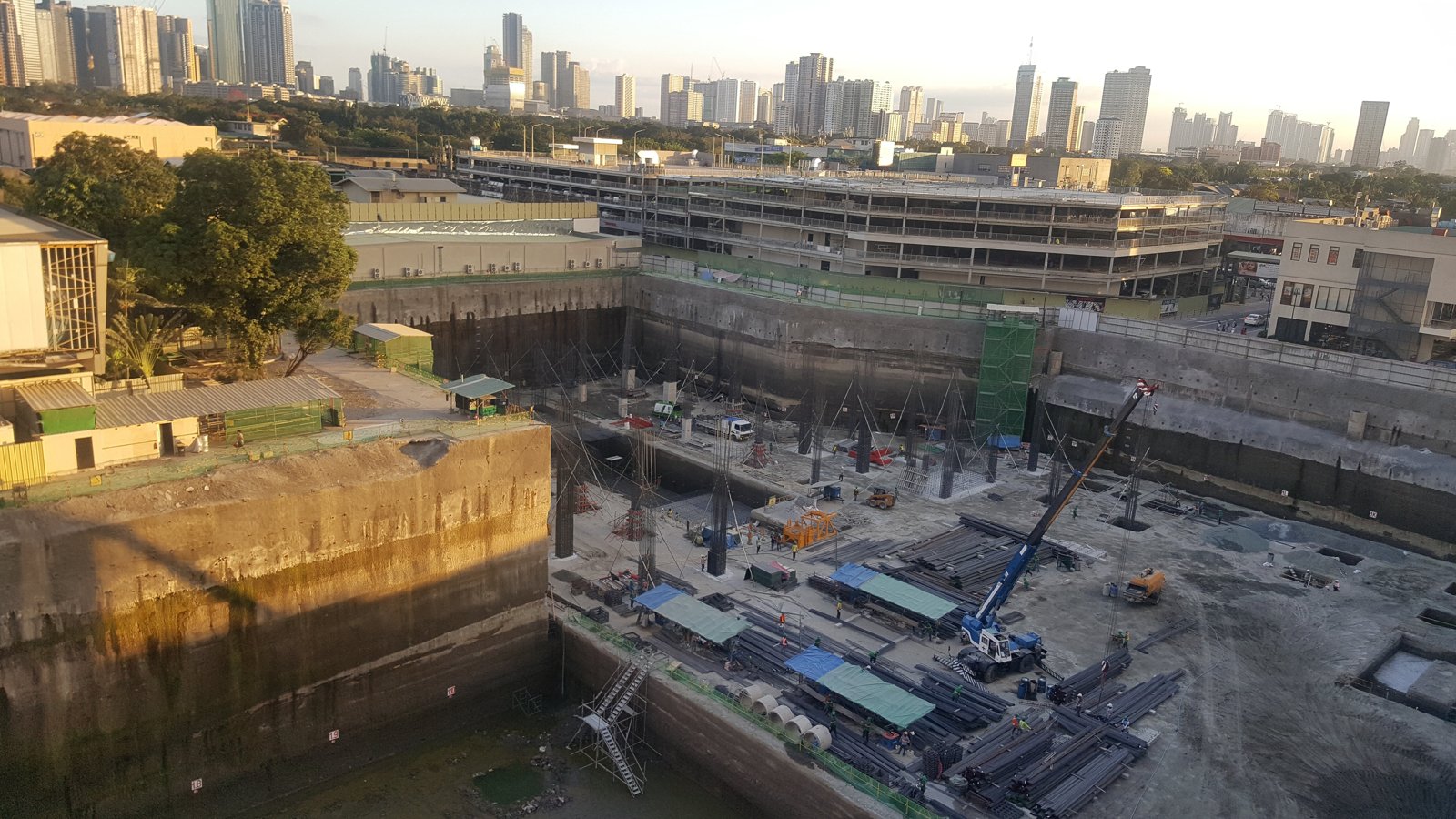
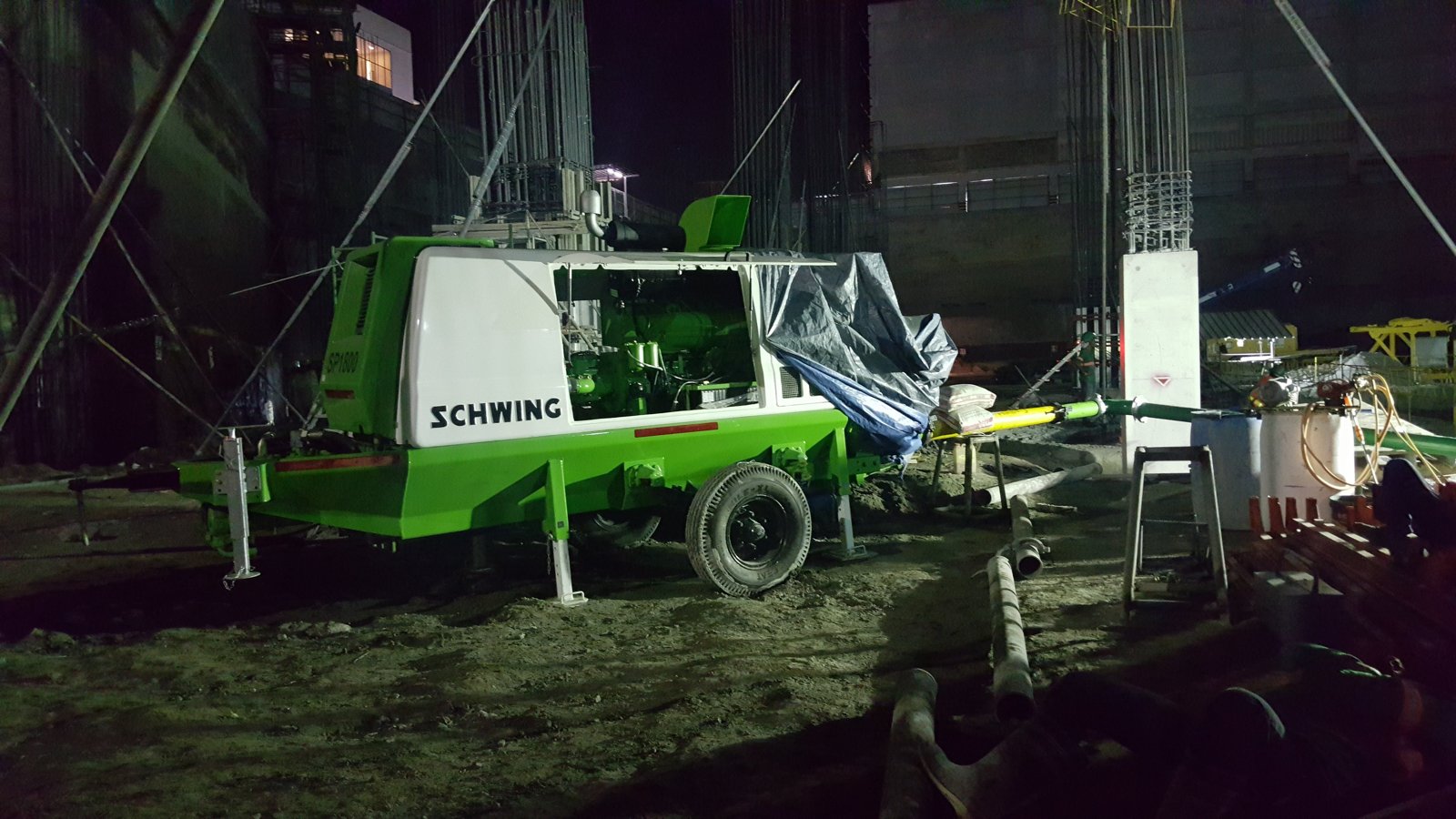
Mix design, aggregate, slump and the condition of the pipeline all move the real figure. This is for estimating only. Send us your pipeline layout and we will size the pump with you.
Find the pump for your building
Enter your floors and pipeline run for a first estimate.