Most pipeline blockages are blamed on the pump. Most of them start in the mix, or at a leaking joint. Knowing what makes concrete pumpable lets you stop a blockage before the first truck arrives, which is far cheaper than clearing one halfway through a pour.
Pumpable concrete is not a special concrete
Concrete is pumpable when it can be pushed through a pipe without the friction against the pipe wall climbing out of control. You do not need an exotic mix for that. A normal, well-proportioned structural concrete with enough fine material will pump. What matters is that the fines, cement and water form a paste that can coat the pipe.
How concrete actually moves through a pipe
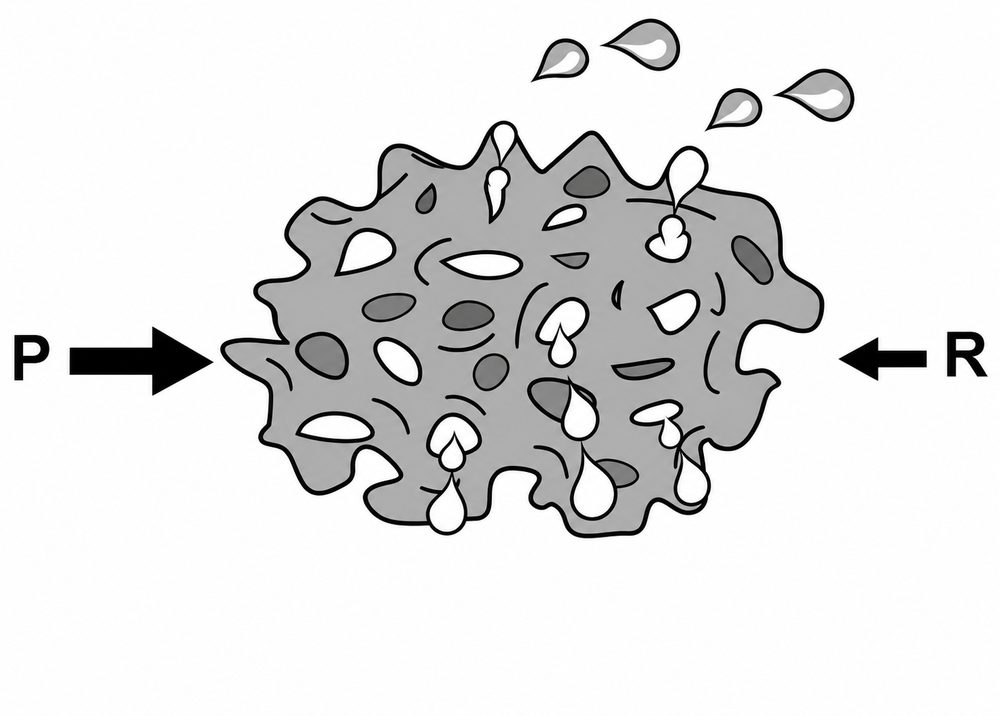
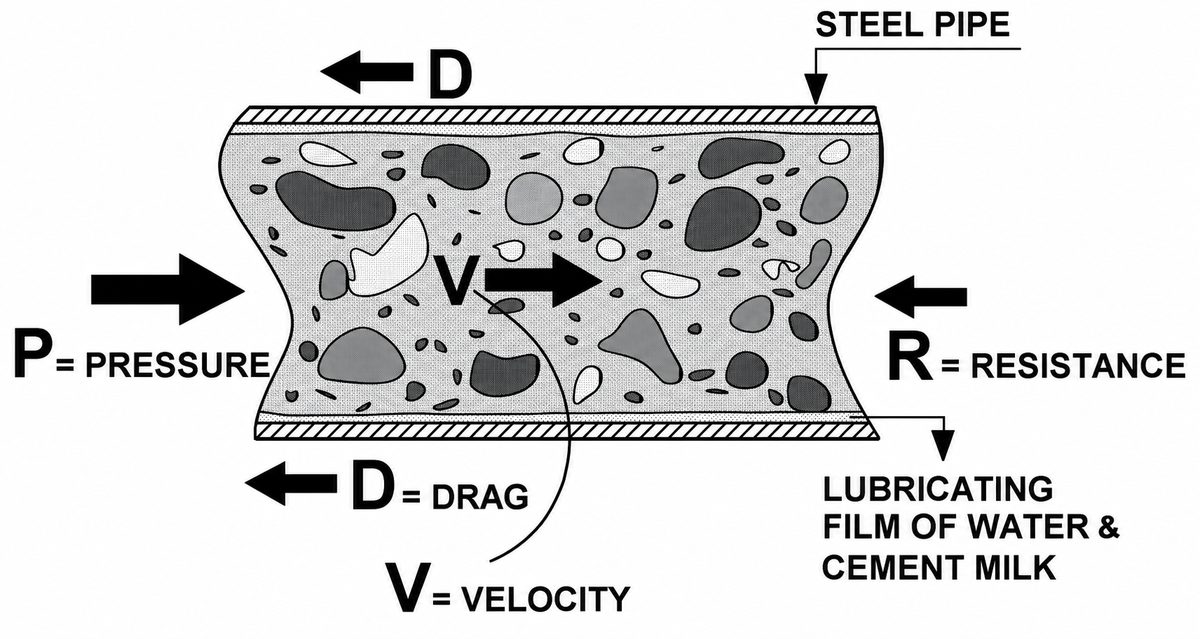
Think of a wet sponge. Squeeze it and water comes to the surface. Concrete under pump pressure behaves the same way: a thin film of cement paste and fines is pressed out to the pipe wall. The stones stay in the middle, and the whole plug slides along on that film.
Check the consistency before you pump
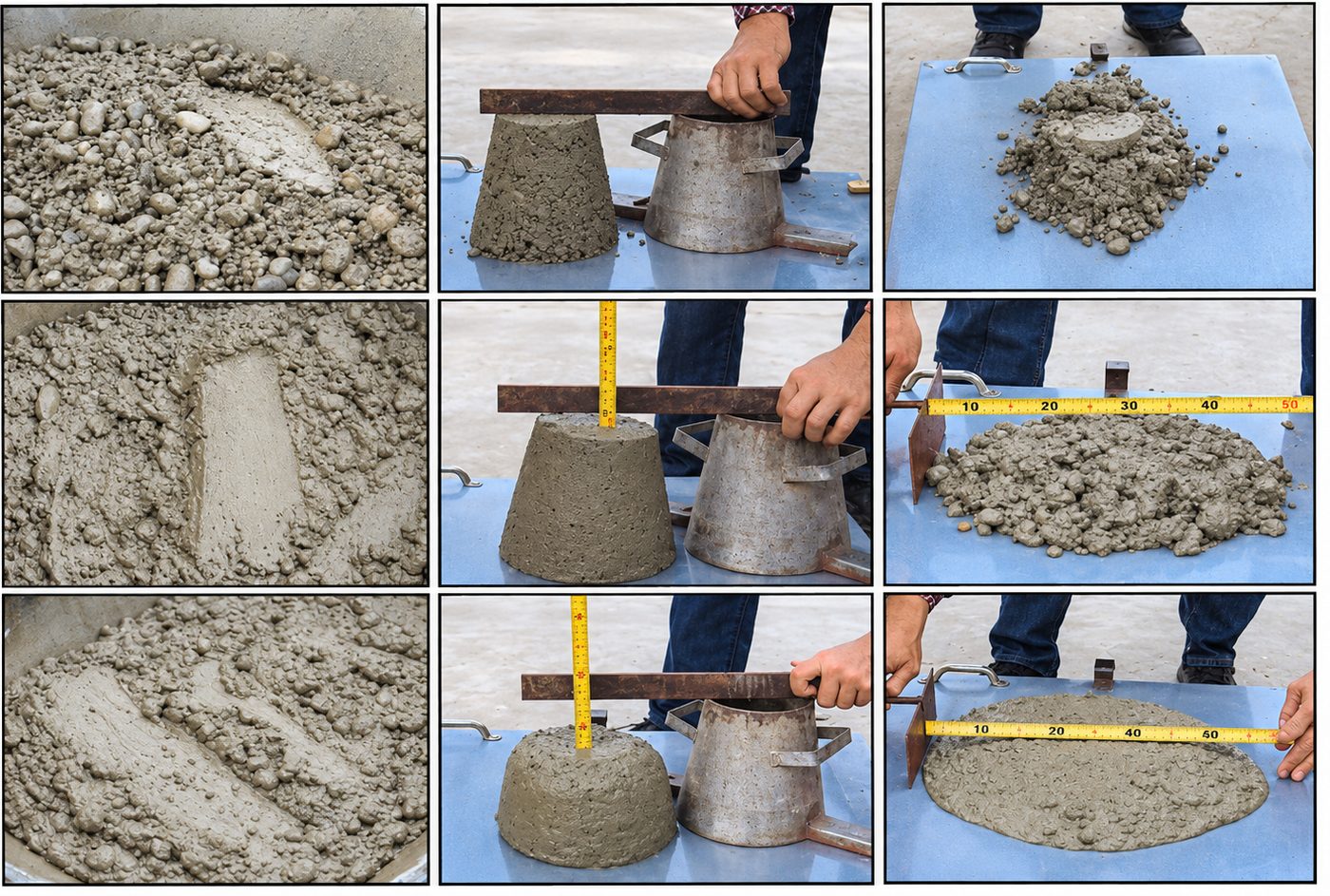
Two simple site tests tell you whether a load is likely to pump.
- Slump test. Fill the cone, lift it away and measure how far the concrete drops. If it does not drop at all, it is too stiff to pump.
- Spread (flow table) test. The concrete is placed on a table that is lifted and dropped 15 times, and the diameter of the spread is measured. If the concrete crumbles apart instead of spreading, it will not pump.
The three ways a line blocks
- The mix is too leanWithout enough cement and fines there is too little paste. The stones settle to the bottom of the pipe and wedge.
- The lubricant leaks awayPaste escaping at a joint or seal leaves dry stone behind it. The usual leak points are listed below.
- The concrete bleedsIf water separates from the mix, the paste goes with it and the remaining material locks up.
Where the paste leaks out
- A worn rubber piston in the pumping cylinder
- The agitator shaft seal in the hopper
- A worn cutting ring at the valve
- A pipeline coupling with a damaged or dirty seal
Each of these is a wear part. Replacing it on schedule costs little. Leaving it until the line blocks costs you the pour, the concrete in the line and the hours it takes to strip and clean the pipes.
Why the weight in the line matters
A full 125 mm line holds 12.3 liters of concrete in every meter, which weighs about 30 kg. A 100 m line is carrying three tonnes of concrete, and every stroke of the pump shoves that weight forward. This is why the line has to be laid and supported properly, and why it has to be emptied and cleaned the right way.
- How to lay and support a concrete delivery line
- How to clean and inspect a concrete pipeline
- How to size a stationary pump for your building height
Pumping a difficult mix?
Tell us the mix, the height and the line length, and we will suggest a pump and a set-up.